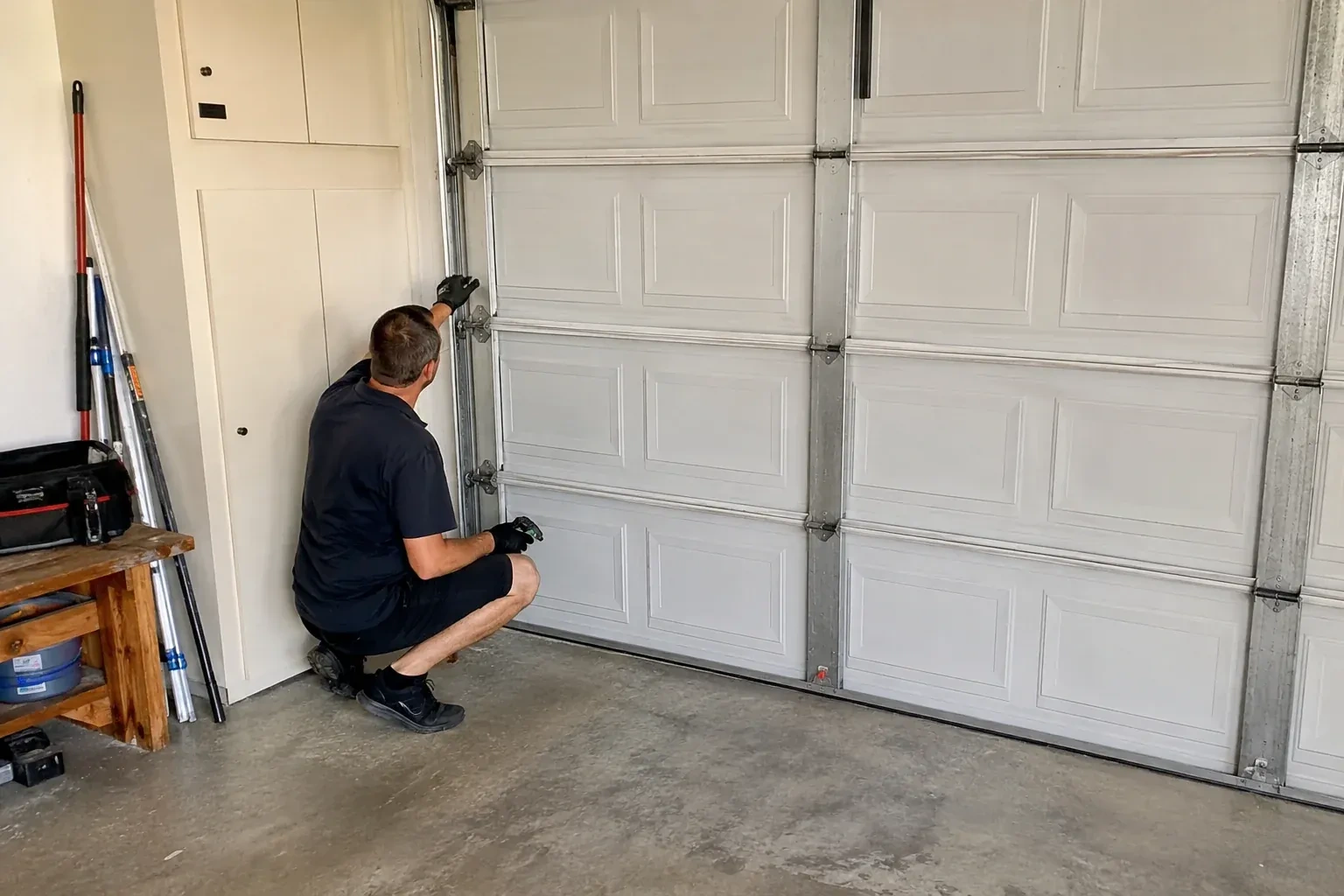
Garage Doors in Toronto, OntarioEvery remote,on the same page.
Remotes, the wall keypad, the button by the kitchen door and the app on your phone all need to agree with the opener. For homeowners in Toronto we program them cleanly, erase codes from remotes that went missing years ago, and show you how to add a new one yourself when the time comes.
Tell us about the spring, cable or opener in Toronto.
Our way of working in Toronto is simple. Listen to what you noticed, inspect the door from the bottom seal to the header, explain the cause in ordinary words, and offer the sensible options with their prices, on site, before the work begins. Parts that still have life in them are left alone.
— Parkdale Garage Door Services
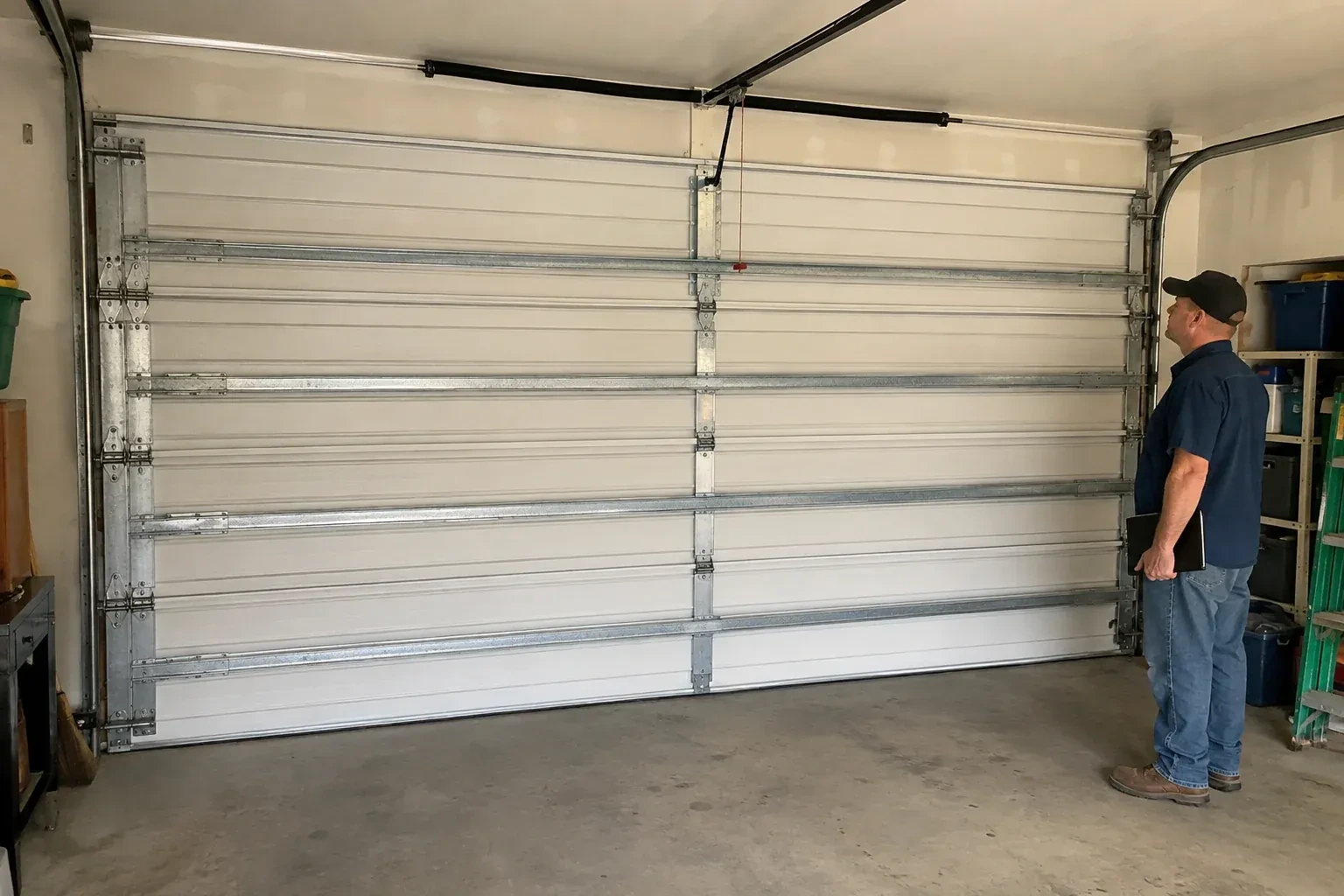
A walk-through of the doorYou see what we see: the spring that has stretched, the cable that is fraying, the sensor that is knocked off line.
Care for what is storedBikes, tools, seasonal boxes and vehicles are moved or covered as needed, and put back where they were.
Choices that fit your plansSelling next year, staying for decades or renting out: the right option depends on that, and we ask before advising.
Hours
HoursOpen 24/7
Nights and weekendsSame fees
In business35 years
VisitsOn-site assessment
Garage door services
Where to start
Broken spring, snapped cable, door off the track, opener humming but not lifting, remote lost, seal cracked, panel dented, door too loud for the bedroom above: those are the calls we take from Toronto, and each has its own service page explaining how we handle it.
Alongside the doors themselves, this group holds the upgrades that improve an existing one: adding insulation, adding windows, converting the track, replacing the opener or refitting hardware for a smoother, quieter door.
Tune-ups are the heart of this group. One visit covers lubrication, hardware tightening, roller and hinge inspection, balance and travel checks and a look at the seals, so small wear is caught while it is still easy to correct.
About 58% of homes in Toronto were built in 1980 or earlier, according to the 2021 Census.
Wiring in an older garage may be a single outlet on the ceiling shared with the light, so a new opener is chosen with that in mind, and a battery backup covers the door during a power cut. The technician looks at the outlet before recommending a unit.
23%
Single-detached houses make up about 23% of homes in Toronto (2021 Census).
Where most residents live in attached homes, a technician's day includes coordinating with neighbours: parking the van without blocking a shared lane, keeping noisy work to reasonable hours, and finishing a door in one visit so the row is not disrupted twice.
Every mild afternoon the snow melts off the car, runs to the door, and by morning the rubber strip along the bottom is frozen to the concrete.The usual fix
Does a wood garage door use the same kind of seal?
Usually not. Wood doors most often carry a flat or angled strip of vinyl or rubber nailed directly to the bottom rail, rather than a profile that slides into a retainer. Replacement means removing the old strip and nails, checking the rail for soft or cupped wood, and fastening a new strip so its lip angles outward and meets the floor along the full width. A retainer can be added to a sound rail if you prefer a channel seal.
Will a new seal make the room above my garage warmer?
It can help. Drafts around the garage door cool the garage, and the garage cools the floor above it and the wall it shares with the house. Closing the perimeter cuts those drafts, though how much warmer the garage runs depends on the door's own seal, the ceiling insulation and how the space is heated, not the perimeter alone. A technician can talk through those as separate steps if the room stays cold.
My key will not turn in the cold. What is happening?
Meltwater has run down the door face into the keyway during a thaw and frozen overnight, or cold has stiffened old lubricant inside the cylinder. Lock de-icer or gentle warmth frees it; hot water is avoided because it refreezes and can crack cold metal. Afterwards the cylinder is dried and given a dry graphite or PTFE lubricant that sheds moisture instead of trapping it.
How often should the track and its fasteners be checked?
A glance each month from inside the garage, with the door closed, is enough to catch a bracket standing off the jamb or a hanger starting to lean. Twice a year, snug the bracket bolts and lag screws, wipe out the channel, and watch the door make a full trip to confirm every roller stays in the track. The industry guidance also suggests an annual visit by a trained door technician, who checks the track with the rest of the system.
Will I need new springs, or just an adjustment?
The inspection decides, and looks past appearance alone. A spring can look sound, with tight, evenly spaced coils, no rust pitting and no gap, and still be the wrong specification for the door or nearing the end of its service life. The technician checks the spring's specification against the door's weight and history: a spring that checks out is wound and left in service, while one that is undersized, stretched, corroded or close to its cycle life is better replaced. Either path ends in a balanced door.
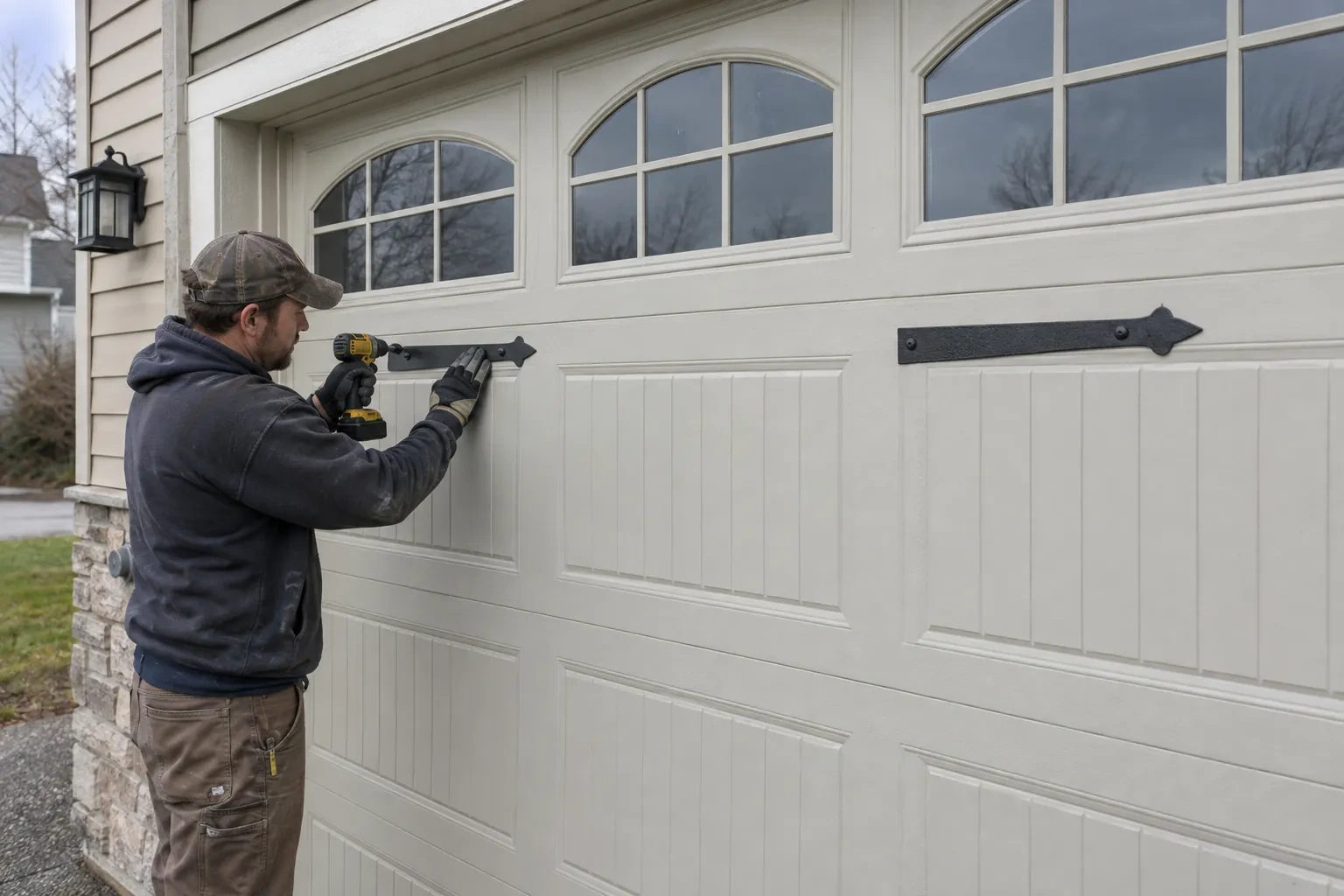
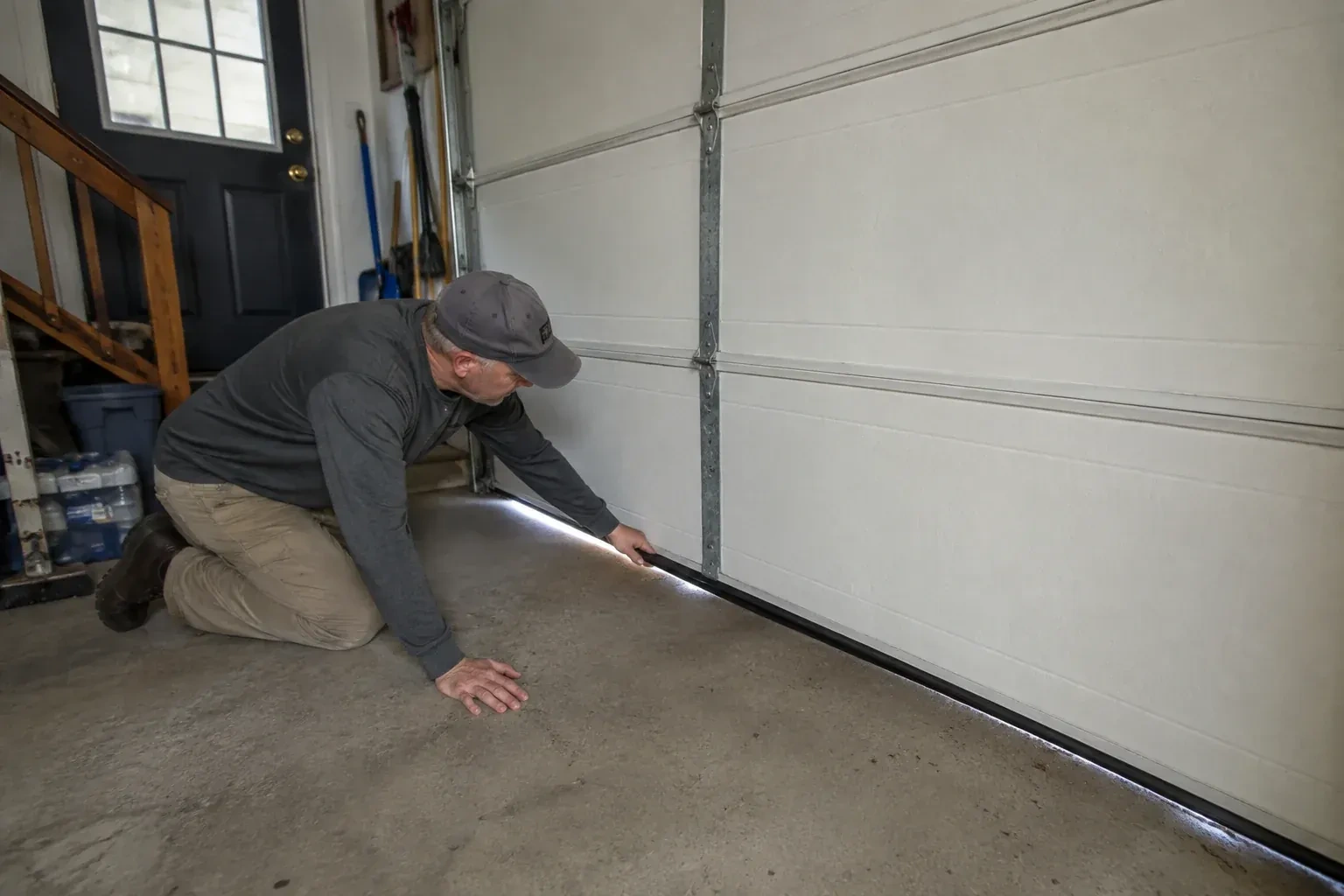 Garage Door Bottom Seal ReplacementThe gap under the door is a finger wide at one end and nothing at the other.
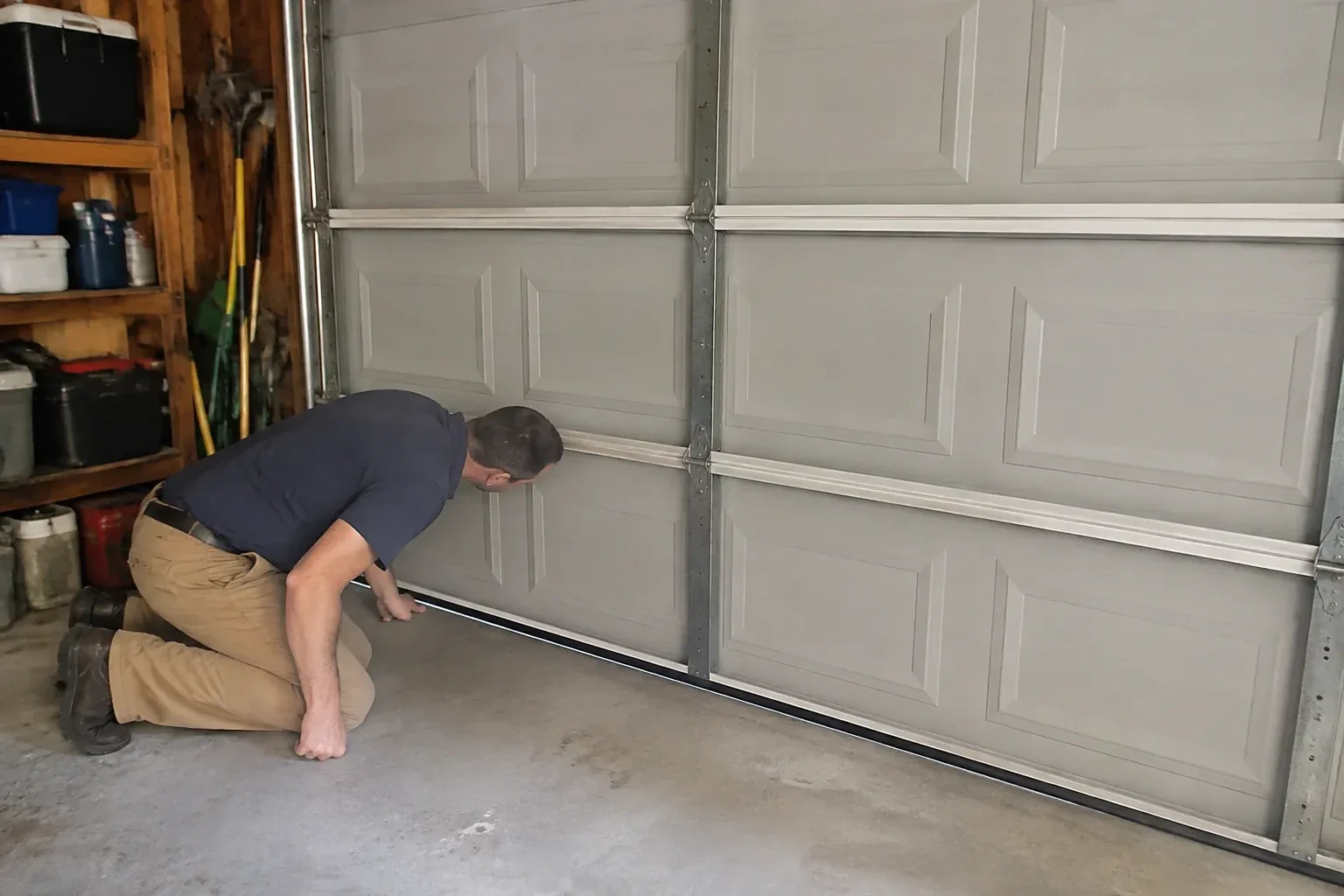 Garage Door Perimeter WeatherstripDry leaves keep appearing in the same corner inside the garage, and this fall there were mouse droppings along the wall beside…
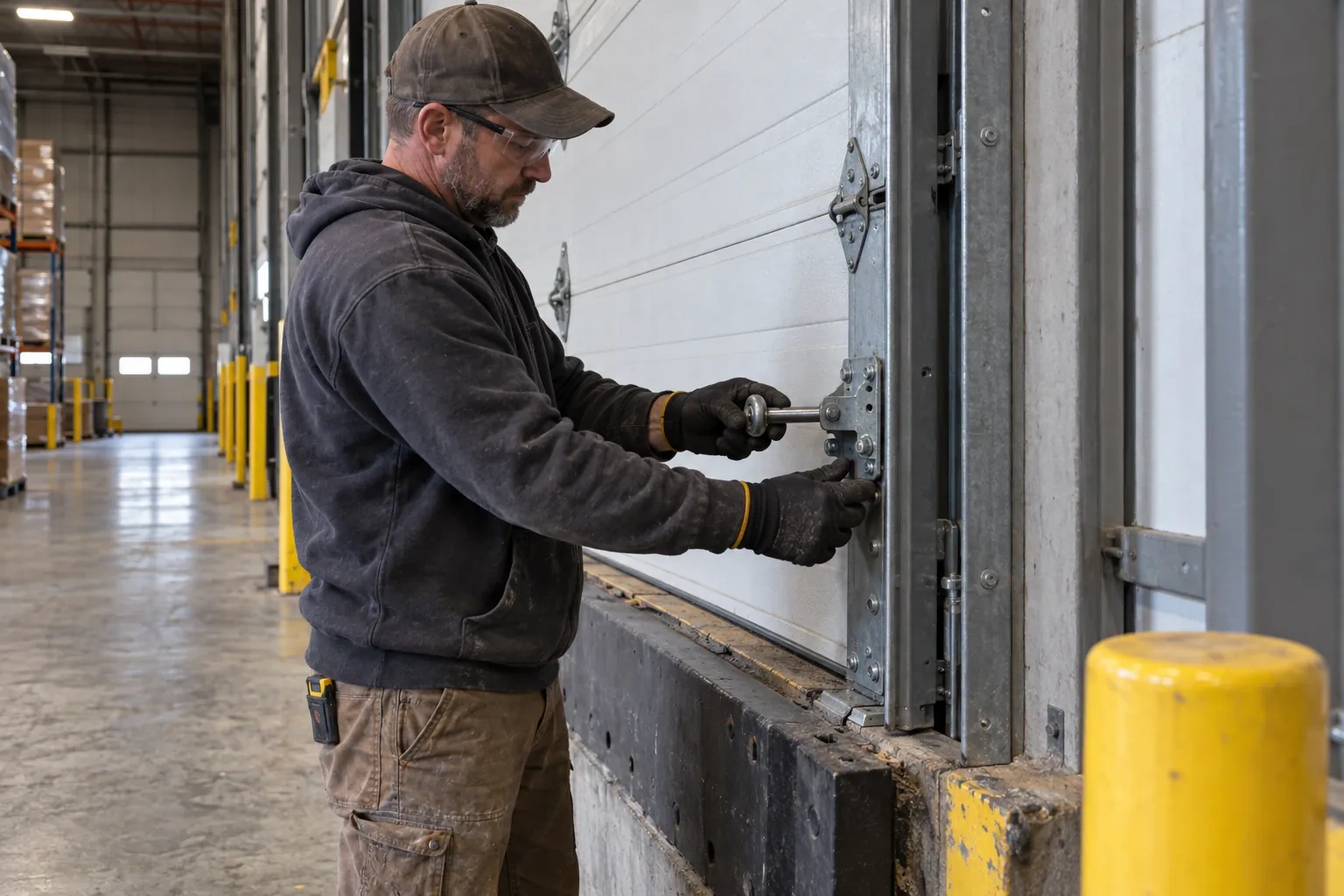
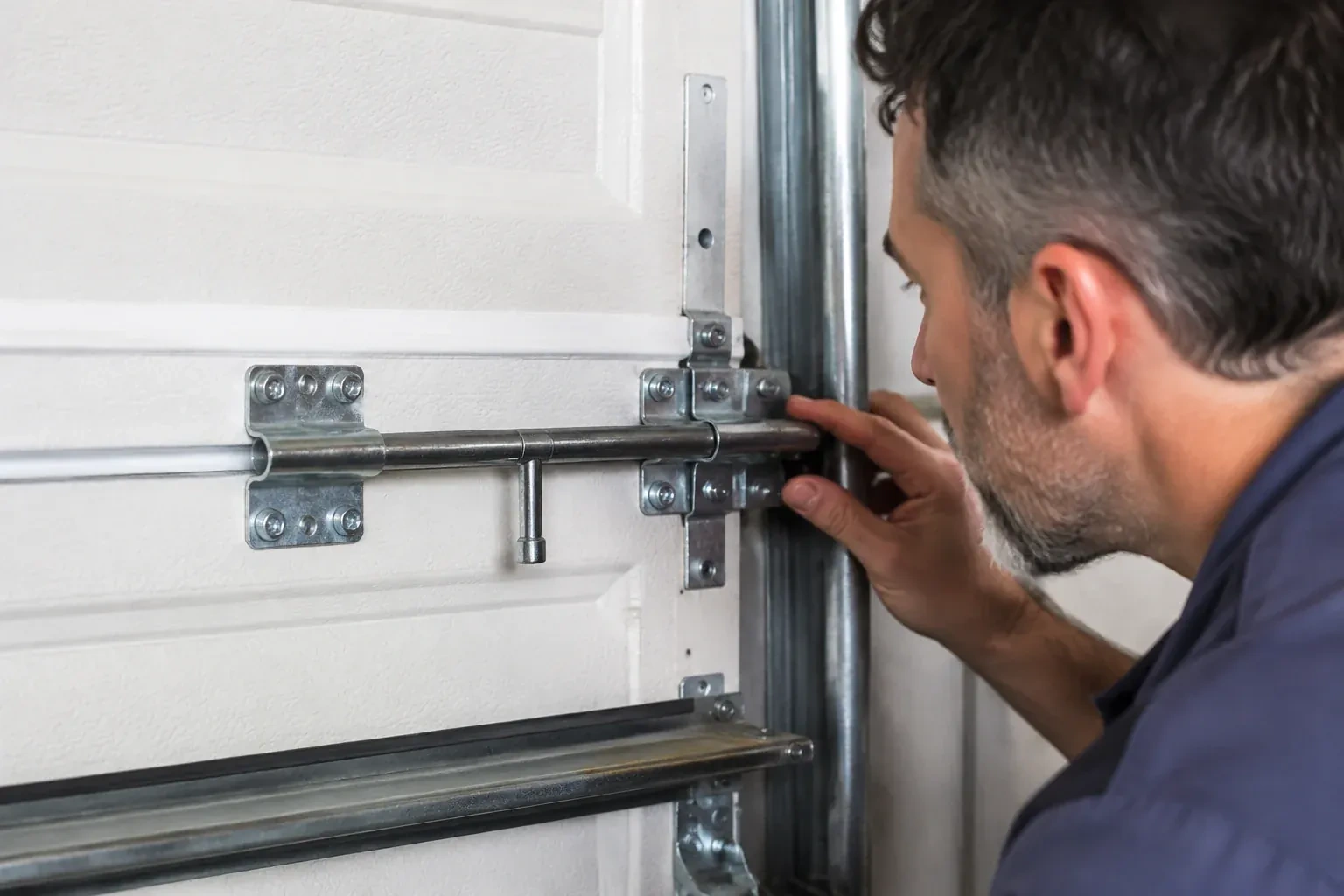 Garage Door Manual Lock RepairThe power is out in a storm, you pulled the red cord and lowered the door by hand, and now you want to lock it.
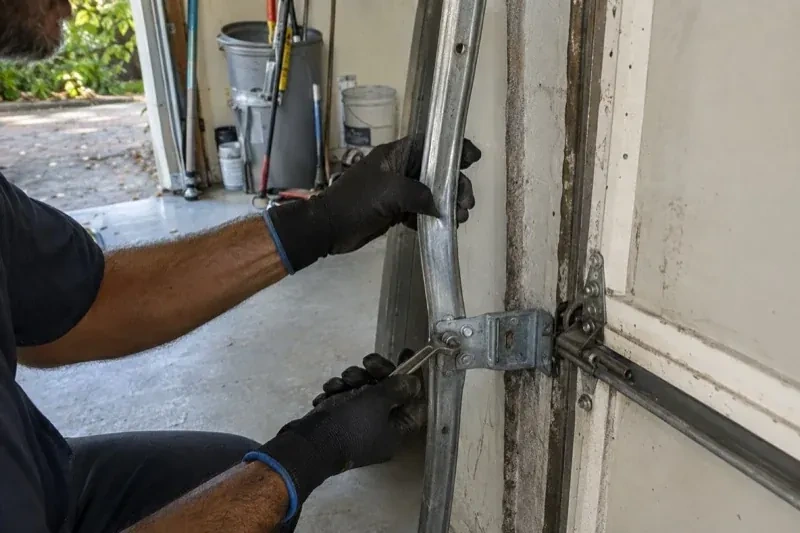 Garage Door Track Repair or ReplacementAfter a decade of slushy winters the bottom foot of the track is flaking rust.
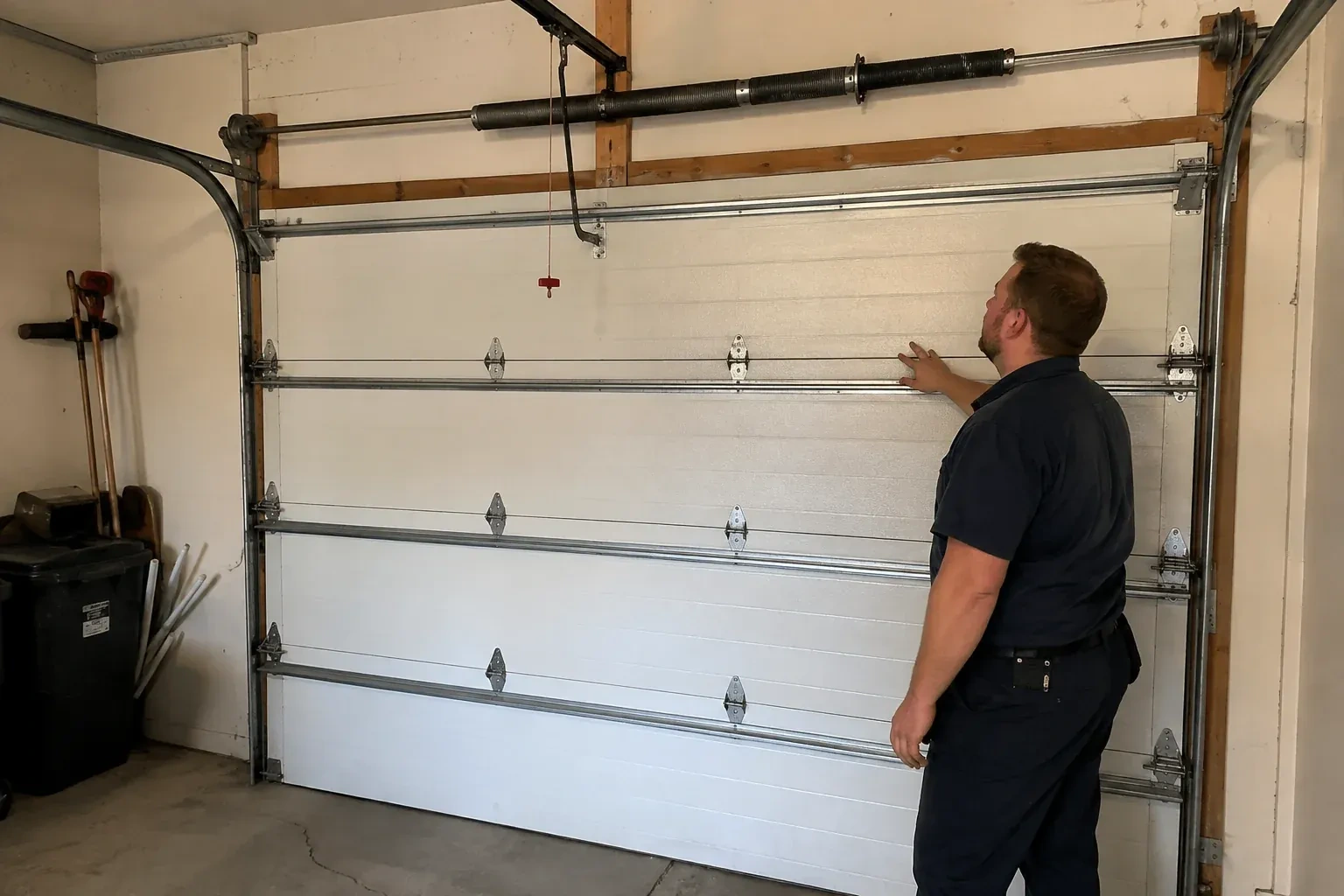 Garage Door Balance AdjustmentYou pulled the red cord to move the door by hand during the power cut, lifted it to about waist height and let go.
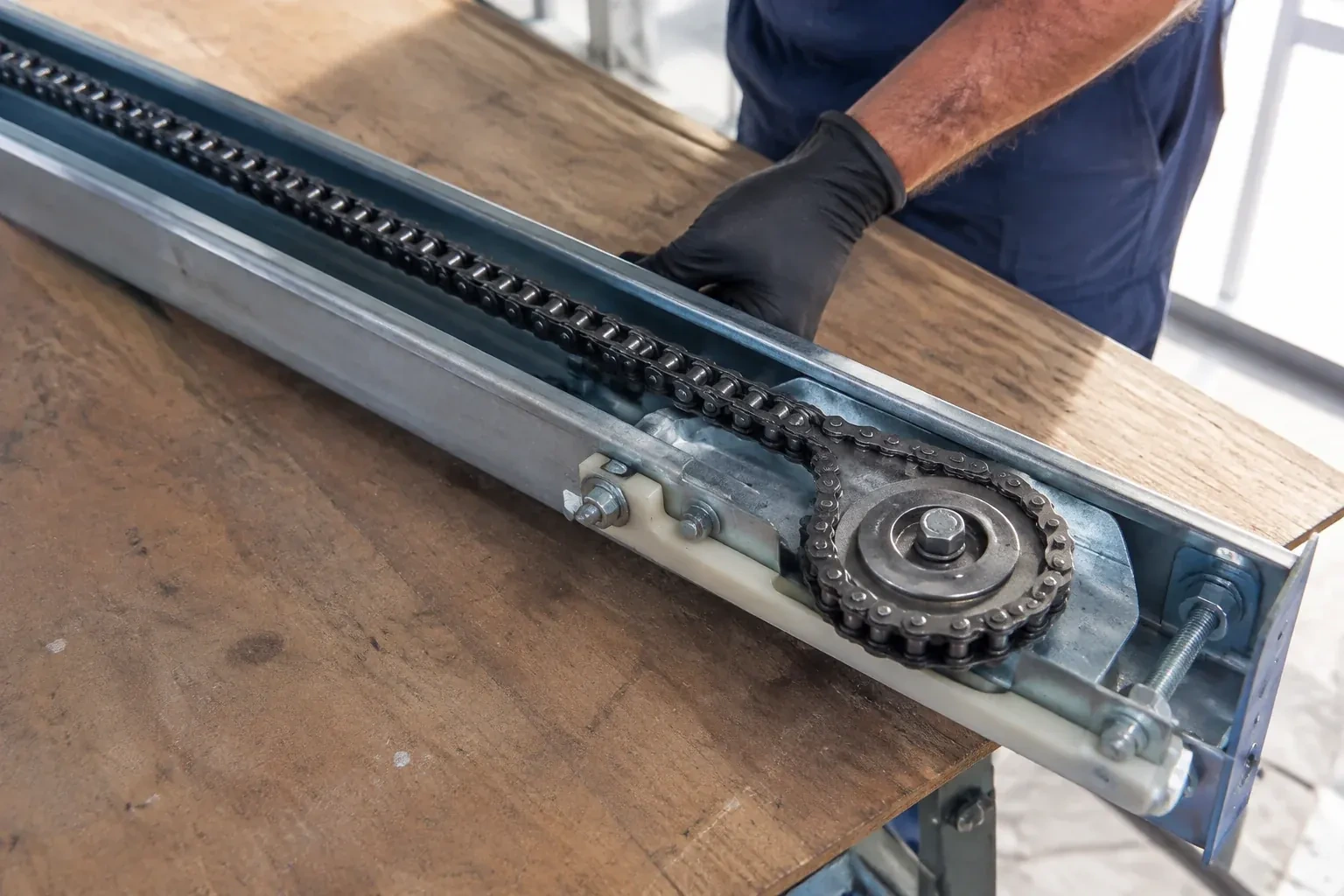 Chain-Drive Opener RepairThe chain in the detached garage went orange with rust over the winter, the links are stiff, and the opener strains and groans to…
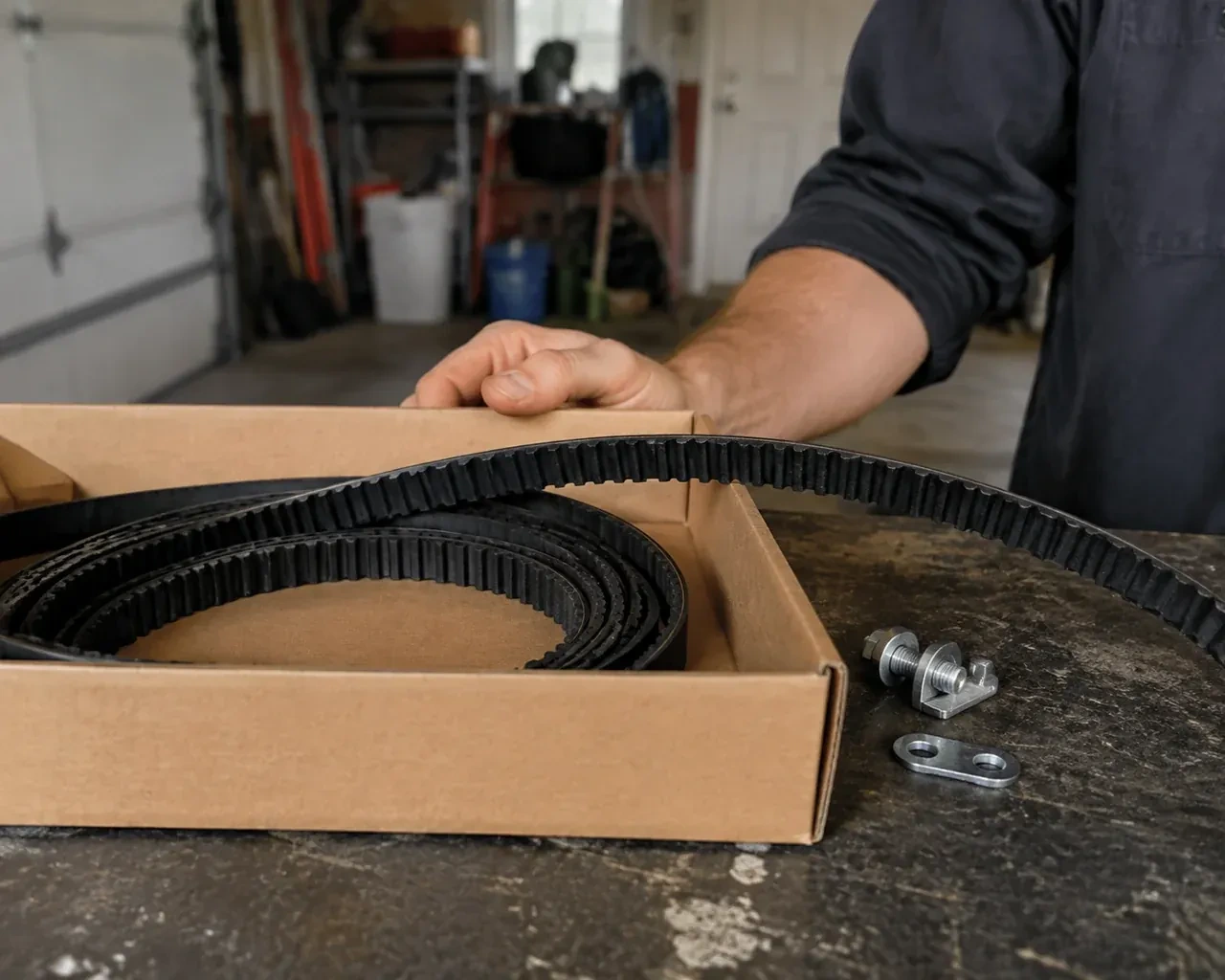 Belt-Drive Opener RepairThe belt looks fine from a distance, but up close the rubber has cracked across the back in dozens of places and, in one spot…
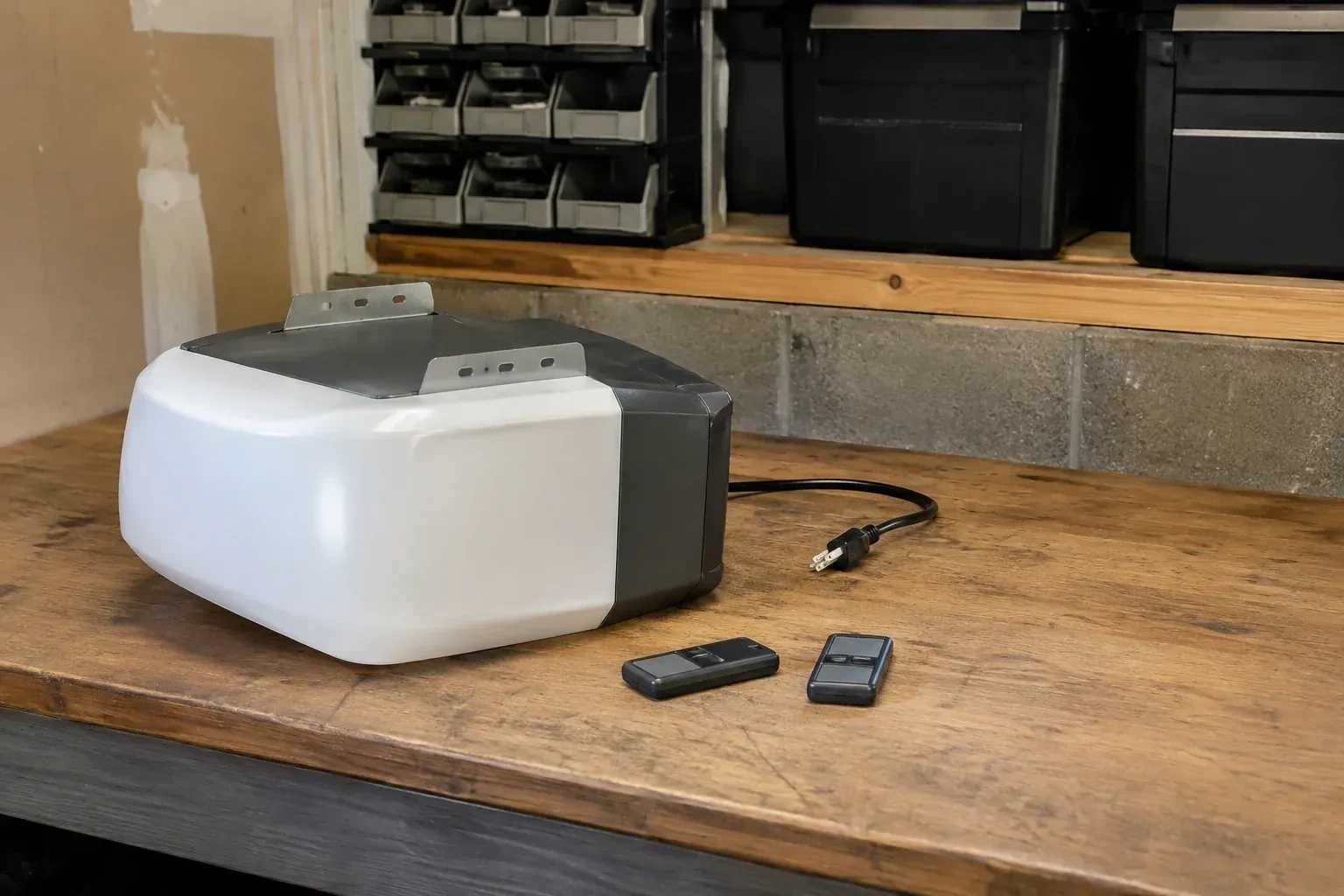 Garage Door Opener ReplacementYou want the ceiling back.
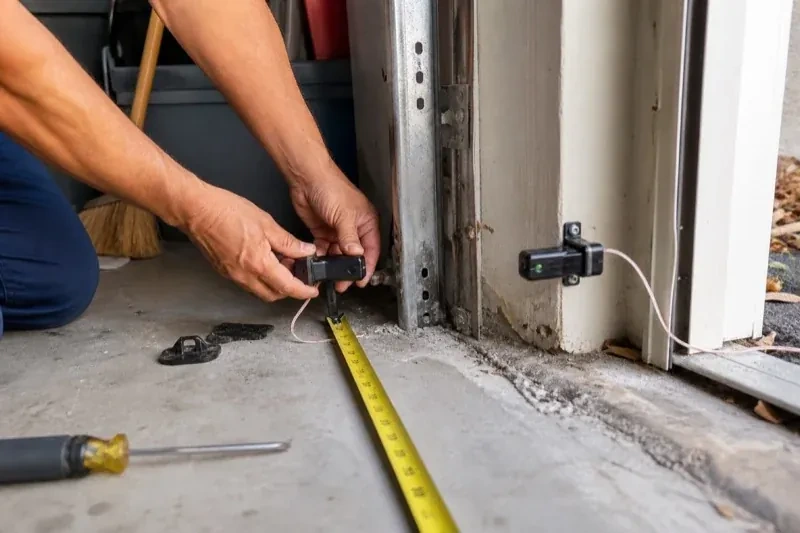 Photo-Eye Sensor Alignment or ReplacementAfter a cold night the door stays open until the garage warms up.
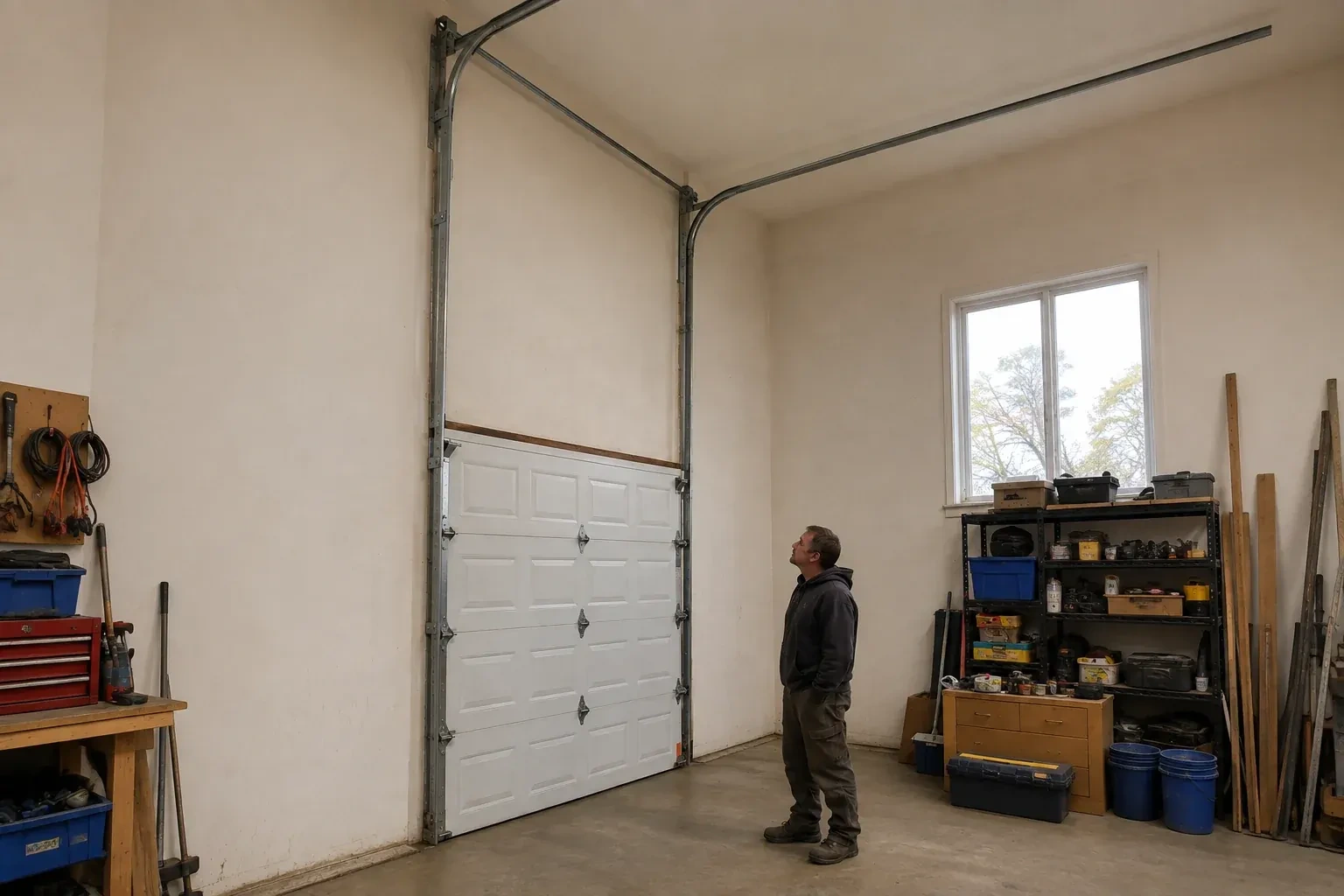 High-Lift Garage Door ConversionYou want to keep the sectional door, but its standard track layout conflicts with a renovation above the parking bay.