Repairs · Toronto
Garage Door Tune-Up
Twice this week the door started closing, stopped a metre from the floor and reopened on its own. One of the little sensor lights near the floor blinks instead of glowing steady, and the wall button has to be held to close it.
Garage Door Tune-Up
In plain words
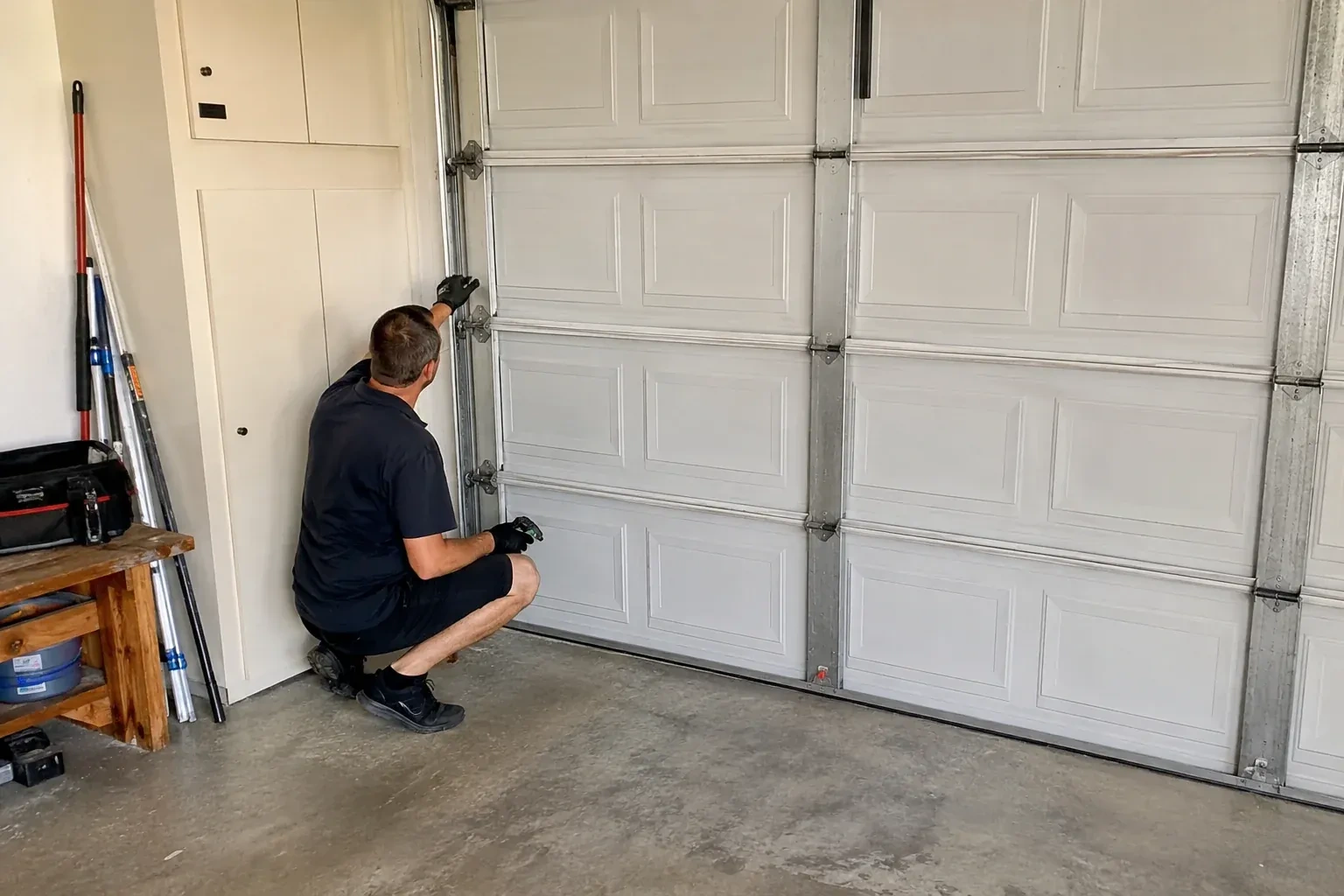
A garage door tune-up is preventive care for a door that still works. Instead of waiting for a part to fail, a technician goes over the whole system while it is operating: the hinges, rollers and tracks, the springs and cables that carry the weight, the fasteners that vibration loosens, and the opener with its sensors and reversal. Loose hardware is tightened, the right points are lubricated with the right product, the balance is checked and the safety tests are run. You end the visit with a door that runs more smoothly and a clear account of anything that deserves its own repair.
How the visit goesTwice this week the door started closing, stopped a metre from the floor and reopened on its own. One of the little sensor lights near the floor blinks instead of glowing steady, and the wall button has to be held to close it.
Toronto
How the visit goes
Watching one full cycle first
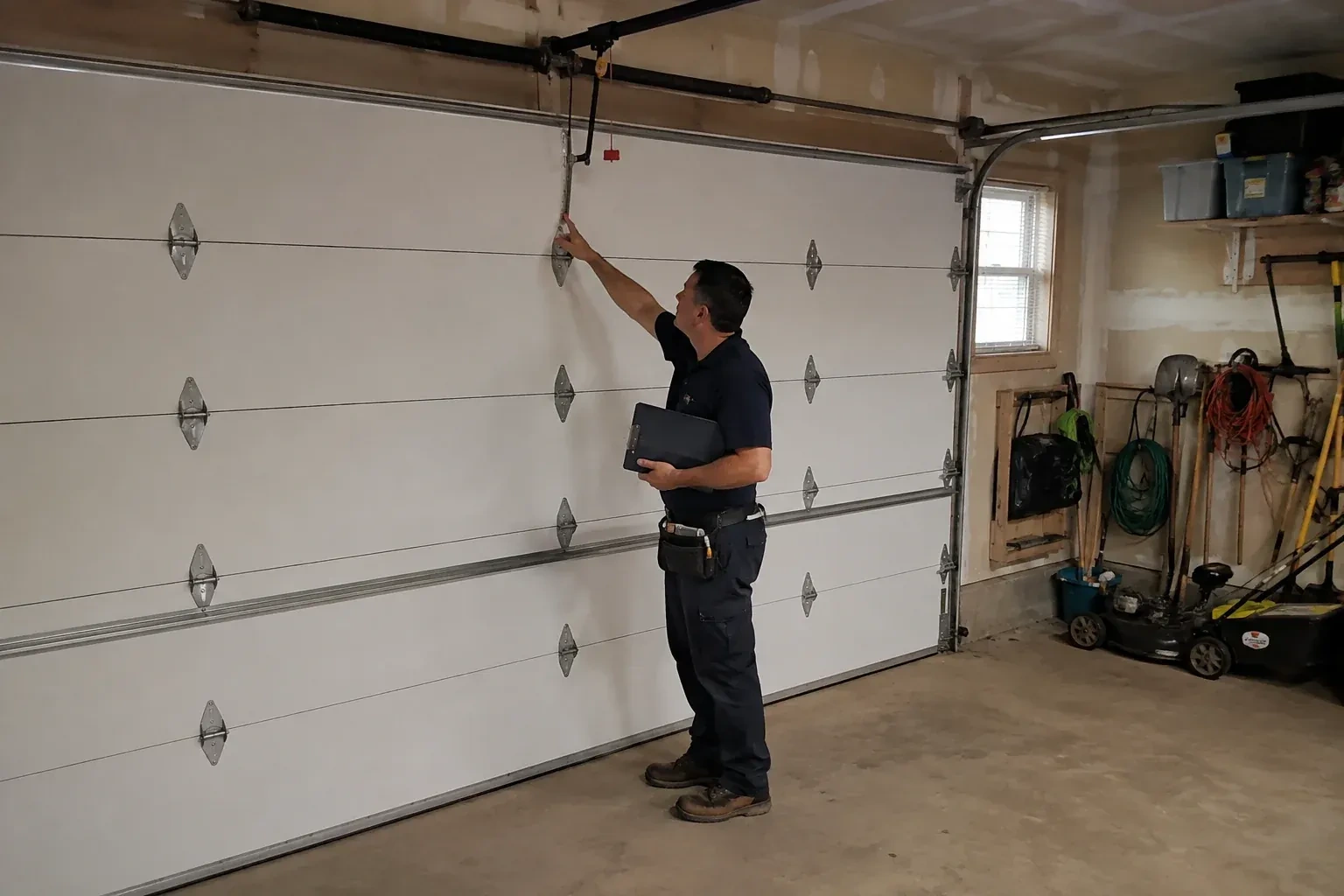
Before a wrench comes out, the technician stands clear of the opening and runs the door all the way up and all the way down. They are listening and watching at the same time: where the squeal starts, whether the sections shake at a particular height, whether the door hesitates at the curve of the track, how it lands on the floor, and whether the opener labours or hums. Each observation is tied to a spot on the door or a point in the travel. That map guides the hands-on inspection that follows and gives a fair comparison at the end, when the same cycle is run again after the work.
Setting travel and force on the opener
The opener has two settings that drift over time: how far the door travels, and how much force it applies before deciding something is in the way. The technician runs the door and adjusts the down travel so the door seals firmly on the floor without bowing the top section or crushing the seal, and the up travel so it stops fully open without the trolley hitting the stop. Force is set as low as will reliably close the door, because a low force setting is what lets the door reverse gently on contact. On a sectional door the arm is kept from passing straight up and down at the closed position, which protects the top section and the rail.
A written record and a priority list
The visit ends with a plain document rather than a verbal summary. It lists what was tightened, lubricated and adjusted; how the balance and both reversal tests came out; the make and model of the door and opener; and the condition of the main parts, sorted into three groups: healthy, worth watching, and ready for its own repair with a quote attached. This record is what makes the next tune-up a comparison rather than a fresh start. It also gives you exact words when a new sound turns up, so you can say which hinge or which roller instead of describing a noise, and it is a useful page in the home file when the house is sold.
Garage Door Tune-Up
In the van
- Lag screws for brackets and header
- 2x4 test block and tape measure
- Bottom seal (astragal)
- Replacement hinges
- Silicone or lithium garage door lubricant
What affects the quote
Same fees day, night or weekend
1Written record and follow-up
A basic handover note is part of every visit. A detailed condition report with photographs for a landlord, a strata or a home sale is available as an added item.
2Condition of rollers and hinges
Worn rollers or a cracked hinge found during inspection can be replaced on the spot if you choose, and each replaced part is listed as its own line on the quote.
3Age of the door and opener
Older hardware may need fasteners in sizes no longer standard, and an opener without photo-eyes prompts a conversation about entrapment protection that is quoted separately from the tune-up.
Garage Door Tune-Up: questions
What information helps when I book?
The door type and rough size, single or double; the opener brand or a photo of its label; what you have noticed, such as noise, shaking, hesitation, slamming or reversing, and whether it is worse in cold weather; whether the door has been struck by anything; and whether the springs are above the door or along the sides. None of this is required, but each detail helps the right parts and tools arrive with the technician.
What is the difference between a tune-up and a safety inspection?
An inspection looks and reports; a tune-up looks, reports and then does the maintenance. Both begin with an observed cycle and a check of hardware, balance, sensors and reversal. A tune-up goes on to tighten fasteners, lubricate the moving points, adjust the opener and align the photo-eyes, and it may swap a worn roller or a bottom seal on the spot. If you want the door serviced rather than assessed, the tune-up is the one to book.
Can a tune-up make my noisy door quieter?
Usually, yes, and often dramatically. Most garage door noise comes from dry hinge pins, dry roller bearings and hardware that vibration has loosened, and those three are exactly what a tune-up addresses. Some noise comes from parts that have worn, such as a roller gone out of round or a chain that has stretched, and the technician tells you which sounds were settled by maintenance and which point to a part worth replacing, with a separate quote for that.
Repair & Maintenance
Garage Door Tune-Up near you
Broken spring, snapped cable, door off the track, opener humming but not lifting, remote lost, seal cracked, panel dented, door too loud for the bedroom above: those are the calls we take from Toronto, and each has its own service page explaining how we handle it.