Openers · Toronto
Garage Door Opener Diagnosis and Repair
For a few days there was a grinding sound whenever the door started moving. Now the motor spins freely and the door stays exactly where it is.
Garage Door Opener Diagnosis and Repair
In plain words
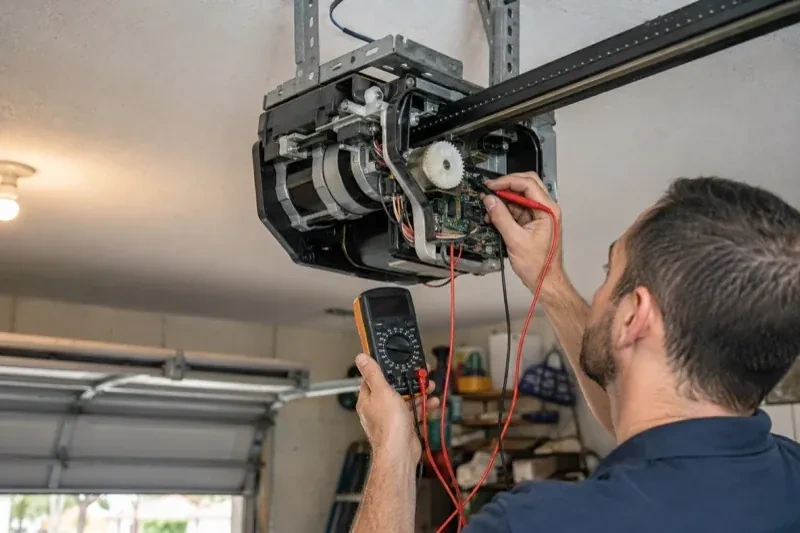
Most openers built in the last fifteen years report their own trouble. When something is wrong the head unit blinks its lights in a count, an up arrow and a down arrow flashing in a pattern, or a status light repeating a number. Each pattern has a meaning on the maker's chart for that model: a sensor circuit open, no motor movement detected, too much force needed to close. The technician reads the pattern, checks it against the model, and confirms it with a hands-on test rather than trusting the light alone. Older units without codes are diagnosed by ear, by meter and by hand.
How the visit goesNothing. No light, no click, no hum from the unit on the ceiling. The remote is dead, the wall button is dead, the keypad is dead. It worked yesterday evening, before the storm knocked the power out for an hour and brought it back with a flicker.
Toronto
How the visit goes
The two small eyes near the floor
The photo-eye sensors are inspected together with their wiring. Each sensor carries a small indicator; a steady light on both means the beam is aligned, while a flicker, a dark light or one that goes out when the bracket is nudged points to misalignment, a loose mount or a damaged wire. The technician sights along the beam, looks for obstructions, cobwebs, frost and low sun on the receiving lens, checks that the sensors sit no higher than about fifteen centimetres off the floor, and traces the wire back to the head unit for staples, kinks and chew marks. Sensor faults are the single commonest reason a door refuses to close.
Capacitor and motor work
On an AC opener that hums and clicks but never turns, the start capacitor is the first suspect. It is discharged, tested and replaced with one of the same rating, a routine job that returns a dead-sounding opener to normal in many cases. If the motor still fails to turn with a good capacitor, the technician checks for a seized shaft, burnt windings or a failed thermal cut-out, and confirms the motor is not simply being stalled by a locked or bound door. A motor replacement is weighed against the age of the unit and the availability of the part, and that judgement is explained before any decision.
Care between visits
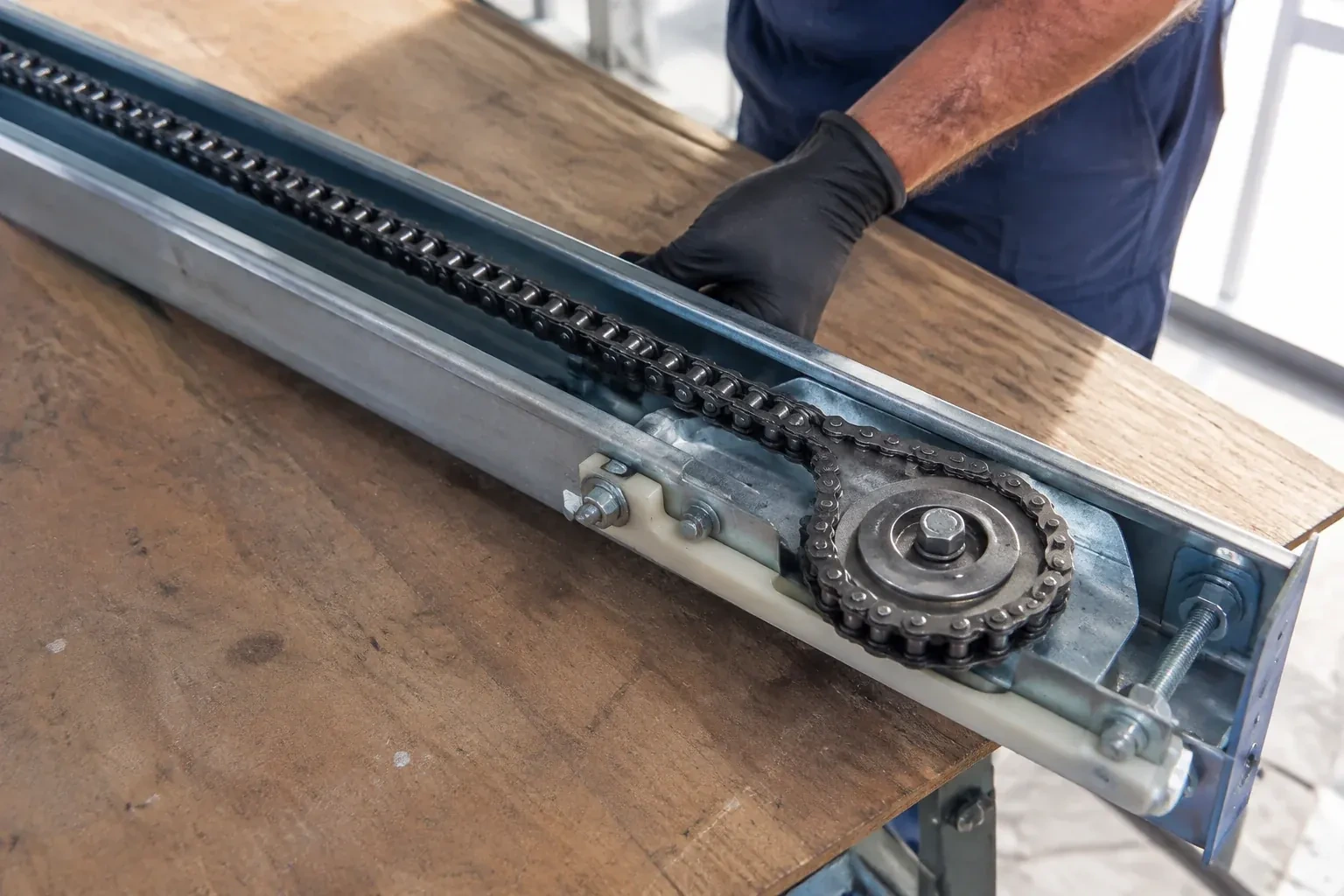
An opener lasts longer when the door it moves stays easy to move. Twice a year, put a garage door lubricant on the rollers, hinges, bearings and springs; leave the track itself clean and dry so the rollers roll rather than slide. Wipe the sensor lenses and check their brackets have not been knocked. Glance at the chain for slack, and at the bolts holding the rail to the header and the ceiling. Listen for new sounds, since a grinding start or a squeal is the drive asking for attention while the fix is still a small one. None of this touches the springs, which stay a technician's job.
Garage Door Opener Diagnosis and Repair
In the van
- Transformer and board fuse
- Travel limit switch or RPM sensor
- Drive gear and sprocket kit
- Start capacitor
- Garage door lubricant
What affects the quote
Same fees day, night or weekend
1Remotes and keypads
Each remote or keypad to be reprogrammed, re-batteried or replaced is counted individually. Say how many devices you have so the quote reflects all of them.
2Getting in when the door is stuck shut
A garage with no side door and no house connection means working the release from outside before any test can begin, and the quote includes that entry step.
3Repair or replacement
When diagnosis points to replacement, the quote changes shape entirely: a new head unit, rail and sensors with installation, plus removal of the old opener, rather than a single part and labour.
Garage Door Opener Diagnosis and Repair: questions
The door is stuck shut and my car is inside. How do you get in?
Through the house if the garage connects to it, or through a side door. Many doors also have an outside keyed emergency release, a small keyed cylinder that pulls the trolley free so the door lifts by hand from outside. If yours does not have one, the technician can fit a keyed release kit as part of the visit so there is a safe way in next time; until then, an alternate entrance is used and the diagnosis proceeds once inside.
Will the repair happen during the same visit?
When the cause is a common part carried on the truck, yes: capacitors, gear kits, sensor pairs, trolleys, wall controls, remotes and wiring are typical. When the part is specific to an older model and has to be ordered, or when the diagnosis finds a spring or cable problem that needs its own appointment, the door is left safe and the next step is agreed with you before the technician leaves.
The wall button works but none of my remotes do. What happened?
Three things account for most of these. The wall control has been put into lock mode, sometimes by a child or a visitor, which blocks all remotes until it is released. The opener's memory was cleared, usually by someone pressing the learn button while trying to program a new remote, so every remote needs programming again. Or the receiver in the head unit has failed. The first two are simple settings; the third is a part.
Openers & Access
Garage Door Opener Diagnosis and Repair near you
Broken spring, snapped cable, door off the track, opener humming but not lifting, remote lost, seal cracked, panel dented, door too loud for the bedroom above: those are the calls we take from Toronto, and each has its own service page explaining how we handle it.