Springs · Toronto
Garage Door Balance Adjustment
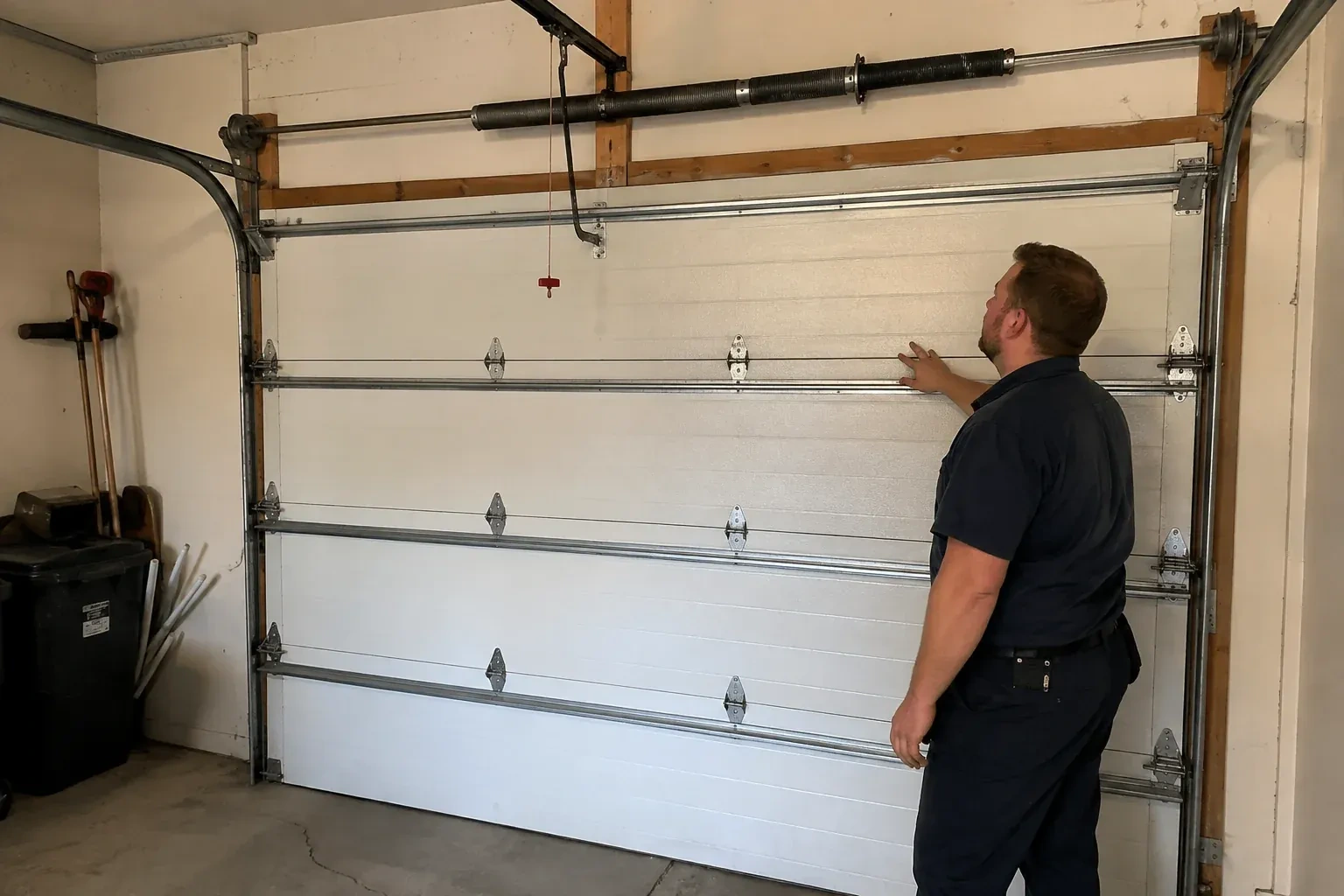
You pulled the red cord to move the door by hand during the power cut, lifted it to about waist height and let go. Instead of staying put, it kept climbing on its own and thumped into the fully open stop.
Garage Door Balance Adjustment
In plain words
Balance changes for ordinary reasons. Springs are rated for a certain number of cycles and lose a little tension as they age. A new bottom seal, insulated panels, a window section or a decorative overlay adds weight the original springs were never sized for. Rollers stiffen, hinges wear, and in a cold snap the whole system feels heavier for a few weeks. Any of these tips the door from weightless to a chore. A balance adjustment starts by identifying which of them is at work, then resets the springs to suit the door as it is today, and corrects the friction so the adjustment holds.
How the visit goesThe door has grown heavy so gradually you stopped noticing, until a visitor tried to lift it and could not. The opener still manages, but it sounds strained, the chain slaps on the way up, and the wall button gets pressed twice most mornings.
Toronto
How the visit goes
Friction along the path
Some doors that feel heavy are not short of spring tension at all; they are dragging. The technician runs a hand and an eye along the vertical and horizontal tracks for dents, misaligned joints and brackets that have pulled away from the jamb, spins each roller to find seized bearings or cracked wheels, and flexes each hinge for play or splits. Dry, worn rollers alone can add real effort to every lift. Binding at one point in the travel, rather than heaviness everywhere, is the signature of a friction problem, and correcting it first means the springs are then adjusted to the door's true weight rather than to the drag.
When adjustment gives way to replacement
Sometimes the hand test shows that the springs have given what they have to give. A torsion spring wound beyond its design turns loses its remaining life; an extension spring stretched to its last hook is at its limit. When the inspection or the door's weight shows the springs are undersized or near the end of their cycle life, the technician explains this and offers a matched replacement, with new springs specified from the door's weight, height, drum and track. The balance work then continues on the new springs, and the outcome is the same properly balanced door, with the added benefit of a fresh cycle count.
Keeping the opener honest
A balanced door lets the opener's safety settings stay at sensible values, and it is worth keeping them there. If the door ever starts to reverse for no reason or struggles to lift, resist the temptation to turn the force up on the motor; that hides a door that has grown heavy again and takes the entrapment protection out of its proper range. Instead, release the door and try the hand test. If it no longer holds, the springs want attention, and a balance adjustment puts the weight back on them so the opener can remain at the gentle settings it was left with.
Garage Door Balance Adjustment
In the van
- Lift cables
- Torsion springs, matched pair
- Winding cone set screws
- Cable drums
- Track clamps or locking pliers
What affects the quote
Same fees day, night or weekend
1Torsion or extension springs
Winding a torsion spring with bars and moving an extension spring's hook are different procedures with different setup, and the type of counterbalance on your door is the first thing that shapes the quote.
2Door out of level
A door with one corner high needs its cables reset on the drums before the tension is set, which adds a step to the visit and is listed as its own item.
3Adjustment or replacement
If the inspection shows springs that can be wound to the door's weight, the quote covers adjustment. Springs that are undersized or worn out mean replacement, which is priced as separate work and explained first.
Garage Door Balance Adjustment: questions
Should I lubricate anything after the visit?
A little, twice a year. Use a product sold for garage doors on the spring coils, hinge pins, roller stems, bearings and bracket pins, and cycle the door a few times to work it in. The tracks want a wipe, not a spray, because a slick track lets the rollers skid and gathers grit. Skip thick grease. Low friction is what lets the springs' setting hold true.
Will I need new springs, or just an adjustment?
The inspection decides, and looks past appearance alone. A spring can look sound, with tight, evenly spaced coils, no rust pitting and no gap, and still be the wrong specification for the door or nearing the end of its service life. The technician checks the spring's specification against the door's weight and history: a spring that checks out is wound and left in service, while one that is undersized, stretched, corroded or close to its cycle life is better replaced. Either path ends in a balanced door.
How long does a balance adjustment take?
A straightforward tension adjustment on a sound door is generally about an hour, including the inspection, the hand tests and the opener checks at the end. Resetting cables to level the door, replacing rollers to remove friction, or moving to a spring replacement adds time. The technician will tell you what the inspection found and how the visit is shaping up before the work continues.
Springs & Hardware
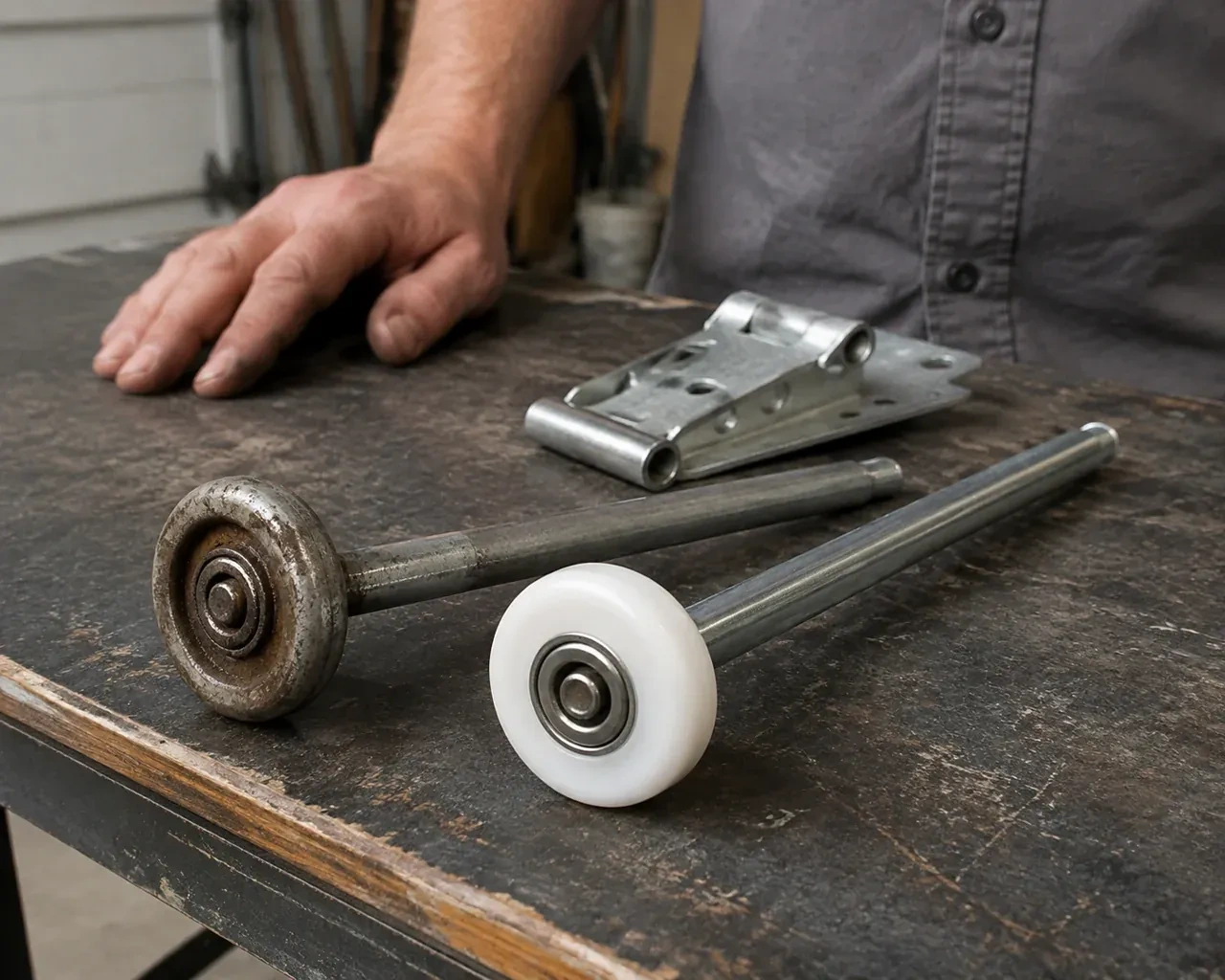
- Garage Door Hinge ReplacementThe roller at the top of the second panel is leaning outward and only half of the wheel is still in…
- Garage Door Track Repair or ReplacementAfter a decade of slushy winters the bottom foot of the track is flaking rust.
- Garage Door Cable ReplacementThe cable has wrapped itself around the shaft above the door instead of sitting on its drum.
Garage Door Balance Adjustment near you
Broken spring, snapped cable, door off the track, opener humming but not lifting, remote lost, seal cracked, panel dented, door too loud for the bedroom above: those are the calls we take from Toronto, and each has its own service page explaining how we handle it.