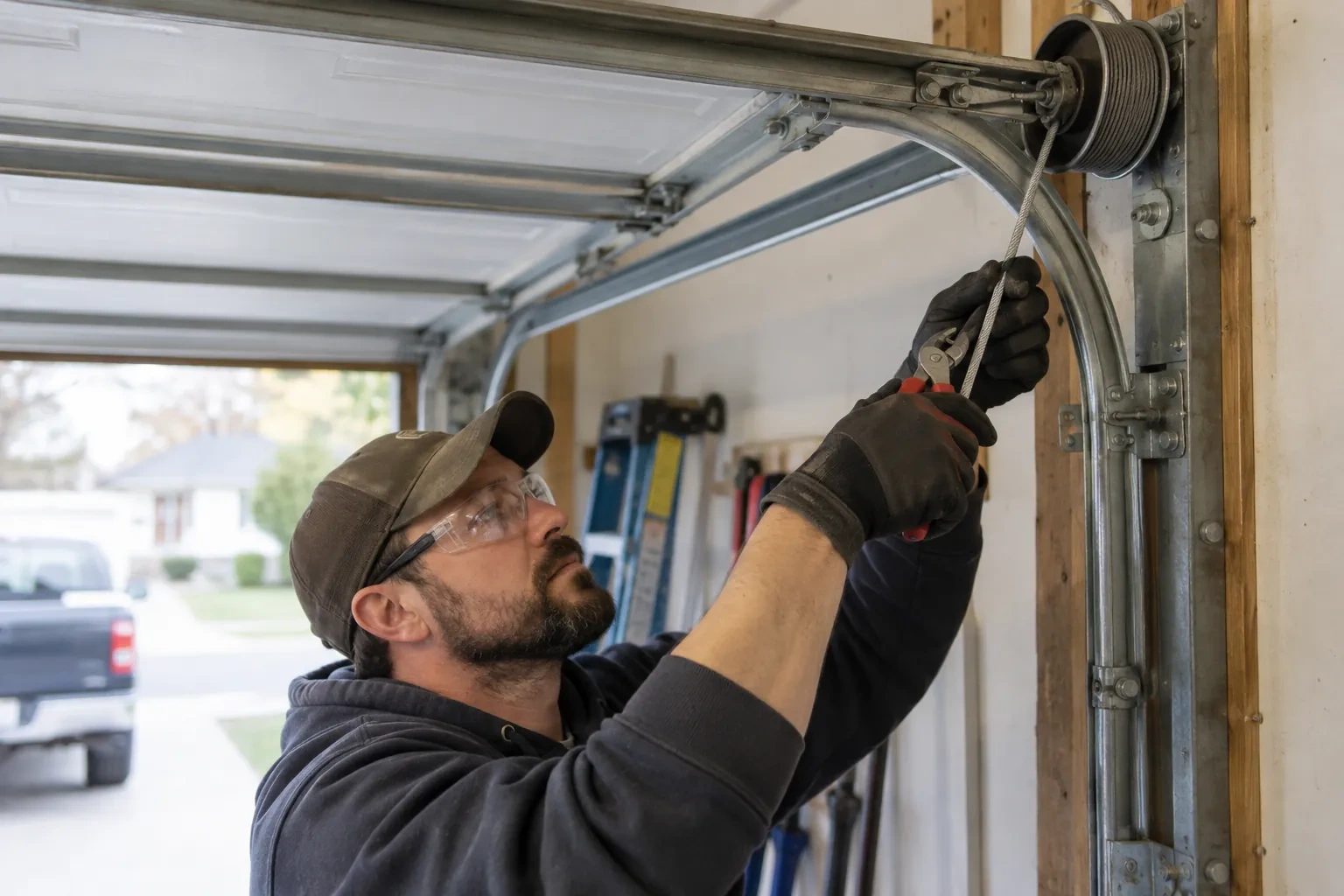
Openers · Toronto
Emergency Release Repair
After a week of lifting the door by hand you pressed the button, hoping it would catch. Instead the motor grinds, the trolley thumps against the end of the rail, and the little lever that should snap back stays stubbornly upright.
Emergency Release Repair
In plain words
Beyond the repair, this service leaves every adult in the house able to use the release confidently. You see the handle pulled straight down with the door shut, the door lifted by its handle or a gripping point away from the panel joints, and the trolley clicked back together by pulling the cord toward the opener or running one cycle. You learn where the handle should hang, why it is red, and what to do if the door ever feels heavy when free. If there is an outside key release, its key gets a home outside the garage. The repair fixes a part; the walkthrough fixes the next outage.
How the visit goesIt is the coldest morning of the year. A week of slush and road salt has crusted over the outside release lock, the key will not seat, and the opener inside is silent after the overnight outage. The car sits behind a door that will not move.
Toronto
How the visit goes
Why the trolley will not latch
When the complaint is a trolley that runs but never reconnects, the technician looks for the usual reasons. The cord may have been pulled back toward the opener, which on many rails deliberately holds the lever out for repeated manual use, and simply never returned. The trolley may have been driven into the stop bolt or stop tab at the end of the rail after the travel limits drifted, so it sits jammed with the motor humming. The latch teeth may be worn, or the release arm bent so it can no longer drop into place. Each of these has a different fix, and telling them apart takes a minute with the cover off.
Fitting or repairing the outside key release
For a garage with no other way in, an outside release is fitted or repaired. A hole is cut for the cylinder where the kit and door call for it, the top section on a sectional door or mid-height on others, the lock is mounted with its plate, and a cable is run from the back of the cylinder to the release lever on the trolley, clear of the section joints and the top bracket as the door bends into the track. The cable is set with slack enough that turning the key and pulling the cylinder throws the lever fully. A seized cylinder is replaced, a stretched cable re-set or renewed, and two keys are handed over.
A record of what was done
You receive a short note: the opener model, which release parts were replaced, the handle height as set, whether the trolley was freed or renewed, what the travel and tension settings are now, and whether an outside release was fitted. Keep it with the house papers. It tells the next technician what is on the ceiling, gives a buyer confidence the door has been cared for, and saves looking up the model when a replacement rope or key is needed years from now. Old parts are left with you or removed, whichever you prefer.
Emergency Release Repair
In the van
- Release cable and clips
- Rope and red handle kit
- 2x4 offcut for the reversal test
- Release lever and spring
- Trolley and carriage assembly
What affects the quote
Same fees day, night or weekend
1Distance to your door
Every visit includes the drive. A property on the edge of the service area or down a long rural road takes more of the technician's day than one a few streets away, and the quote allows for it.
2Door material for the outside release
Cutting a cylinder hole through a thin steel section is routine; an insulated door, a wood door or a glass-panel top section takes more care and sometimes a reinforcing plate.
3Freeing versus replacing the trolley
A trolley jammed on the stop bolt is freed, adjusted and reused when its latch is sound. One with worn teeth or a cracked body is replaced, which changes both parts and labour.
Emergency Release Repair: questions
I lost the key to the outside release. What now?
The cylinder can be replaced with a new one and two fresh keys, which is the usual answer since a lost key may be in someone else's hands. On some units the cylinder can be rekeyed instead. Either way the cable and lever are checked while the lock is out, and the technician suggests keeping the spare key outside the garage, with a neighbour or in a lockbox, rather than inside behind the door it opens.
Does every type of opener have a release?
Yes, in different forms. Chain and belt units have the familiar red handle on a cord from the trolley. Screw-drive units release at the carriage on the rail. Wall-mounted openers beside the door use a handle on a cable that is pulled down until it clicks, since there is no rail overhead. The parts differ, so the technician identifies the model before choosing a cord, lever, trolley or cable, and shows you the sequence for your own unit.
How high should the release handle hang?
No more than about 1.8 metres above the floor, so an adult standing on the slab can reach it, and high enough to clear the roof of the car parked beneath it. It should also be plainly visible and red. If a new door or a rail change left the cord short, or a previous owner tied it up around the rail, the technician cuts a fresh rope to the right length and moves any obstruction out of the way.
Openers & Access
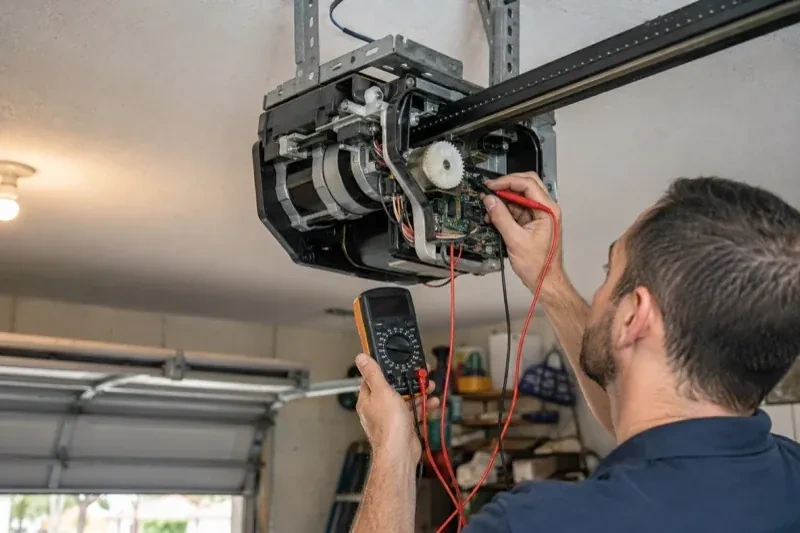
- Chain-Drive Opener RepairThe chain in the detached garage went orange with rust over the winter, the links are stiff, and…
- Belt-Drive Opener RepairThe belt looks fine from a distance, but up close the rubber has cracked across the back in dozens…
- Garage Door Opener ReplacementYou want the ceiling back.
Emergency Release Repair near you
Broken spring, snapped cable, door off the track, opener humming but not lifting, remote lost, seal cracked, panel dented, door too loud for the bedroom above: those are the calls we take from Toronto, and each has its own service page explaining how we handle it.