Openers · Toronto
Chain-Drive Opener Repair in Toronto
The chain in the detached garage went orange with rust over the winter, the links are stiff, and the opener strains and groans to pull the door up. By afternoon, once the garage warms, it behaves almost normally.
Chain-Drive Opener Repair
In plain words
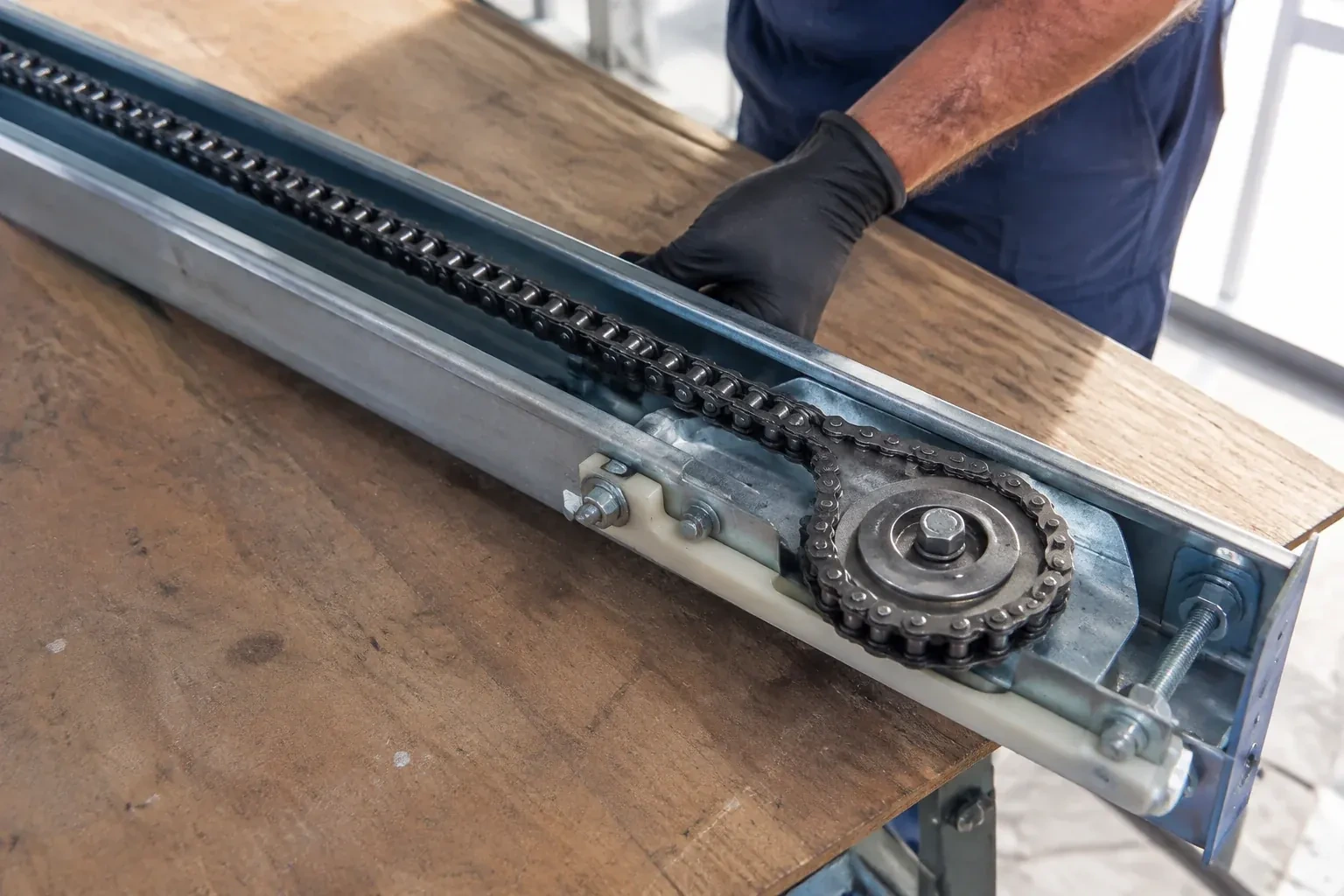
Here is how a visit runs. The technician watches the door run once, then unplugs the operator, pulls the red release and lifts the door by hand to confirm the springs are doing their job. The head cover comes off and the gear, sprocket shaft and capacitor are looked at. The chain, trolley, rail and hangers are inspected along their full length. Worn parts are swapped for the model's own, the chain is phased and tensioned, the limits and force are set, and the door is tested against a block on the floor and an interrupted sensor beam. You are shown the release handle and the monthly checks.
How the visit goesThe door closes, touches the floor, then climbs straight back up as if it hit something. Nothing is in the way, the sensor lights are steady, and it has been doing this since the weather turned.
Toronto
How the visit goes
Under the head cover
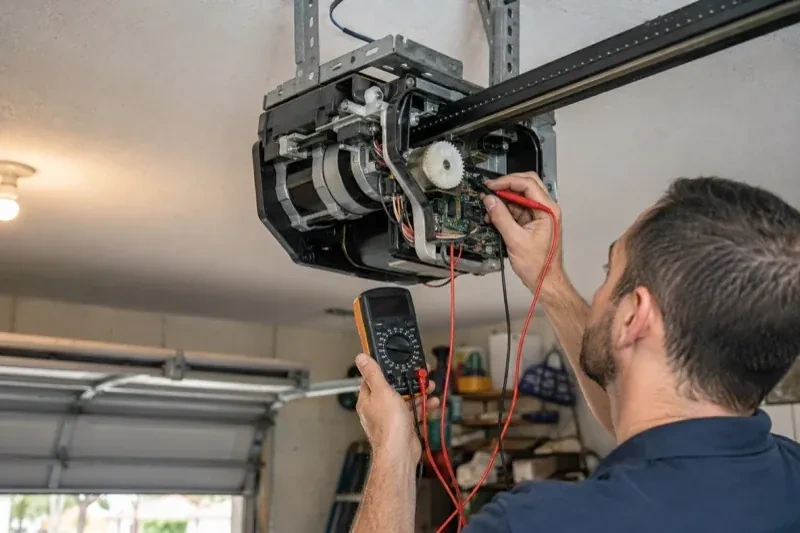
With the power off, the cover comes off the motor head so the drive can be seen. The technician looks for pale shavings around the drive gear, which mean the teeth are wearing away, and for a sprocket shaft that rocks when pushed, which points to worn bushings. The worm gear on the motor shaft is checked for scoring, the grease is judged for age and cold-thickening, and the capacitor is inspected for swelling. On newer heads the RPM sensor and its magnet are checked, since a faulty one makes the operator lose track of how far the door has moved. This look decides whether the job is a gear kit, a chain or an adjustment.
Bringing the chain back into phase
If the drive has been run without the chain on the sprocket, the motor and the trolley disagree about the door's position and the door travels partway no matter how the limits are set. The technician slackens the chain and lifts it off the sprocket, then runs the operator and watches the sprocket: when it turns and stops on its own in the closed direction, the motor is at its closed position. The trolley is moved to the closed end of the rail, the chain is refitted over the sprocket, and tension is set. On some heads the internal limit assembly is aligned instead. The limits are then adjusted so the door reaches the floor and its full open height.
Balance is what protects the new gear
The drive gear that was replaced can wear out when it is asked to lift more than the chain should carry, though binding or wear elsewhere in the drive can share the blame. Keeping the load honest starts with the door's balance. Each season, with the door closed, pull the red release, lift the door by hand to about a metre and let go; it should stay put. If it sinks or creeps upward, the springs have drifted and a spring adjustment is due before the operator starts working harder to compensate. Reconnect by running the operator until the trolley picks up the arm. This one check does more for the gearbox than anything else you can do.
Chain-Drive Opener Repair
In the van
- Trolley release lever
- Cold-rated garage door lubricant
- White lithium grease
- Sprocket and shaft assembly
- Drive gear and worm gear kit
What affects the quote
Same fees day, night or weekend
1Rail hardware and hangers
Loose hangers, a header bracket that has pulled from the framing, or splice plates that need renewing add fasteners, angle iron and time on the ladder to a job that might otherwise be an adjustment.
2Two operators in one visit
A double garage with two chain drives, or a house and a detached workshop, share the travel and setup and are quoted as one visit with two repairs.
3What is known before the visit
A model number and photographs of the head, rail and chain let the technician arrive with the right gear kit or chain, which keeps the job to one visit rather than two.
Chain-Drive Opener Repair: questions
How much slack should the chain have?
It is a measurement, taken with the door closed and disconnected from the trolley. At the middle of the rail the chain should sit at the height the opener's own manual specifies for its rail shape, since the figure is not the same across makes. The two nuts on the trolley set and lock it. With the door reconnected and closed, some droop appears; that is expected as long as the measurement returns when the door is open.
Is a chain drive supposed to be this noisy?
A chain drive has a steady mechanical sound that a belt drive lacks, and that much is normal. What is not normal is change: a slap along the rail from a loose chain, a clack at one spot from a worn sprocket tooth, grinding from the head as a gear wears, or a rattle from hangers or a header bracket that have loosened. Each of those has a fix, and a repaired chain drive should sound the way it did when it was new.
Why does the door touch the floor and then go back up?
The operator believes it has hit something. Either the down travel limit is set a little too far, so the door is pressing into the floor past its stopping point, or the closing force is set too low for the door's current weight, so the last push reads as an obstruction. A seal frozen to the slab causes the same reversal in winter. The technician adjusts the limit or the force, in that order, and re-tests the reversal afterwards.
Openers & Access
Chain-Drive Opener Repair near you
Broken spring, snapped cable, door off the track, opener humming but not lifting, remote lost, seal cracked, panel dented, door too loud for the bedroom above: those are the calls we take from Toronto, and each has its own service page explaining how we handle it.