New Doors · Toronto
High-Lift Garage Door Conversion in Toronto
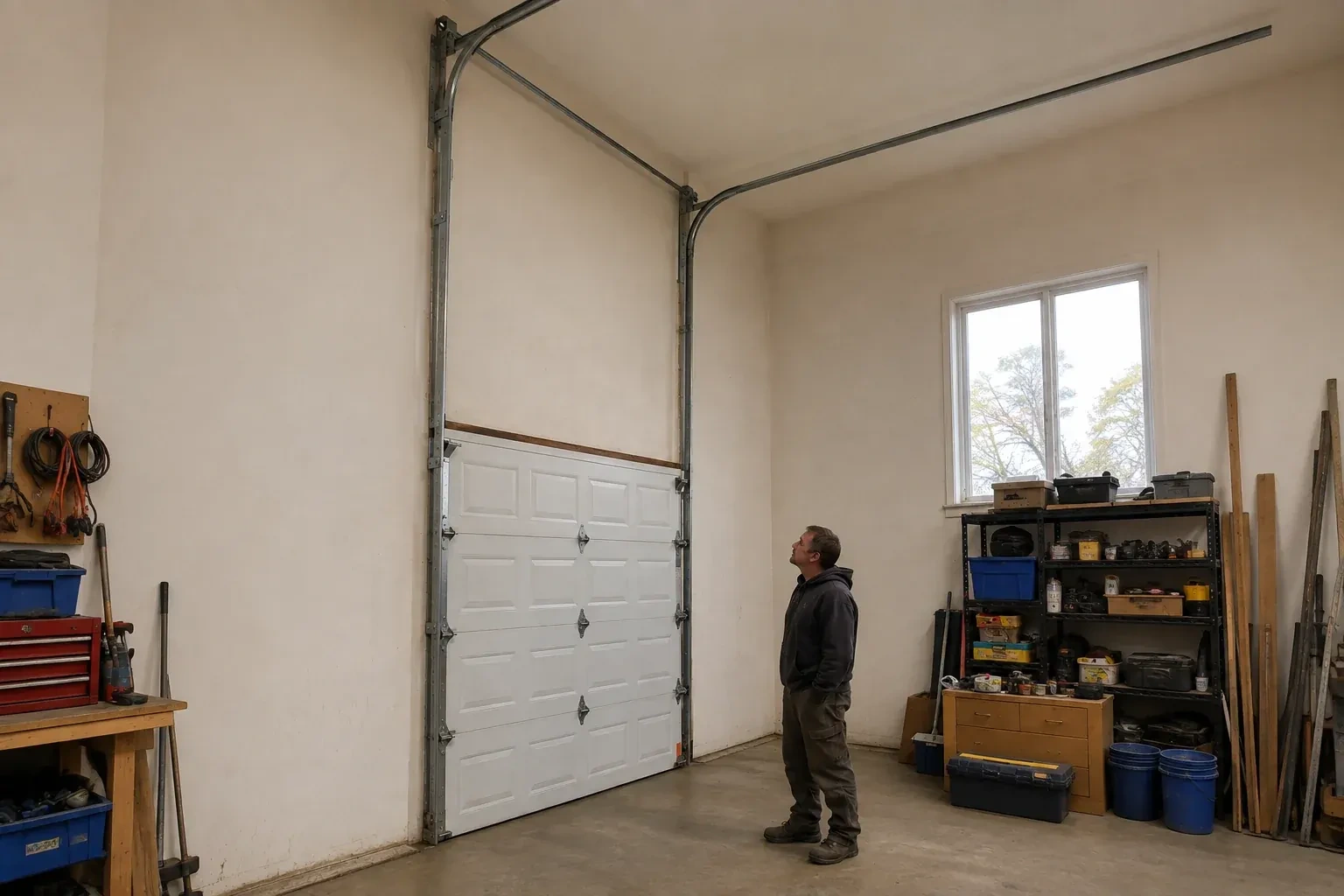
You want to keep the sectional door, but its standard track layout conflicts with a renovation above the parking bay. There is visible room over the opening for the door to climb before it needs to turn inward.
High-Lift Garage Door Conversion
In plain words
This conversion is a measured redesign of an existing sectional-door system. It begins by identifying the door, weighing or confirming its weight, inspecting the sections and locating sound support points. A layout is then developed for the extra vertical rise, shaft position and horizontal track. Components are selected for that geometry and installed as a matched set. Manual balance, cable tracking, roller movement and powered safety functions are checked before handover, leaving a documented arrangement that future service can understand.
How the visit goesA garage project has reached the measurement stage, and overhead clearance is the deciding detail. The current springs, drums and tracks were built for standard lift, while the intended use calls for additional vertical travel.
Toronto
How the visit goes
Review the counterbalance as a system
The existing springs are not judged by appearance alone. Door weight, added vertical travel, drum geometry, cable path, shaft length and desired cycle characteristics all shape the new counterbalance specification. The technician records spring tags where present, shaft diameter, bearing locations, drum type and cable condition, then uses the proposed layout to calculate the replacement set. This system review is what lets the door feel controlled from floor to open position, even though the panels now follow a substantially different route.
Match drums and cables to the new travel
High-lift drums have a contoured cable surface that manages changing leverage as the door climbs. The selected drums are installed on the shaft with new lift cables of the specified length and construction. Each cable is routed from its bottom attachment, seated correctly in the drum grooves and set evenly with its partner. Technicians rotate the system under controlled conditions to observe how both sides wind. Proper drum and cable coordination keeps the door level and maintains useful tension throughout the vertical and curved portions of travel.
Seasonal observation without adjustment
Temperature and humidity shifts can change lubrication behaviour, door weight and how materials move, while road salt and moisture may reach lower hardware. From a safe position, look for smooth travel, an even bottom edge and cables that remain neatly seated. Listen for a new scrape or repeated contact at the transition. Cleaning accessible track surfaces and following the manufacturer-listed lubrication points supports regular care. Spring, cable, drum and bottom-bracket changes remain technician work because those components carry the counterbalance load.
High-Lift Garage Door Conversion
In the van
- End bearing plates
- High-lift vertical tracks
- Compatible operator hardware
- Centre bearing support
- Transition track sections
What affects the quote
Same fees day, night or weekend
1Finished opening dimensions
Door width and height establish the scale of track, shaft, cable and support work, while the opening geometry also affects access and installation handling.
2Hardware finish and corrosion exposure
Material finish and environmental exposure, including seasonal moisture or road-salt conditions, can shape component selection and the ongoing care requirements for installed hardware.
3Electrical coordination
A relocated operator may need a suitable power location or revised control wiring, which is identified separately from the mechanical door scope.
High-Lift Garage Door Conversion: questions
What happens to the current garage door opener?
Its compatibility and location are assessed with the new track path. A rail-mounted opener may occupy the clear zone or use geometry that does not suit added vertical travel. Where the existing unit and approved configuration fit, it may remain; otherwise another compatible arrangement becomes part of the scope. Limits, release function, controls and protective devices are tested after mechanical commissioning.
Can a high-lift conversion create room for a vehicle lift?
That is a common reason to consider one. The assessment uses the lift's raised height, the vehicle profile and working clearance to define the needed zone. The proposed door path is then measured against that zone, including the lowest section in the open position. Final feasibility depends on available wall height, ceiling conditions, structure and equipment placement.
Why is manual balance checked before powered operation?
The operator is intended to move a properly counterbalanced door, not compensate for an unsuitable spring or drum setup. Manual checks show how the door behaves without motor force and help technicians refine spring adjustment for the finished geometry. Once movement is controlled and consistent, powered commissioning can focus on limits, controls and protective devices rather than masking a mechanical issue.
Installation & Upgrades
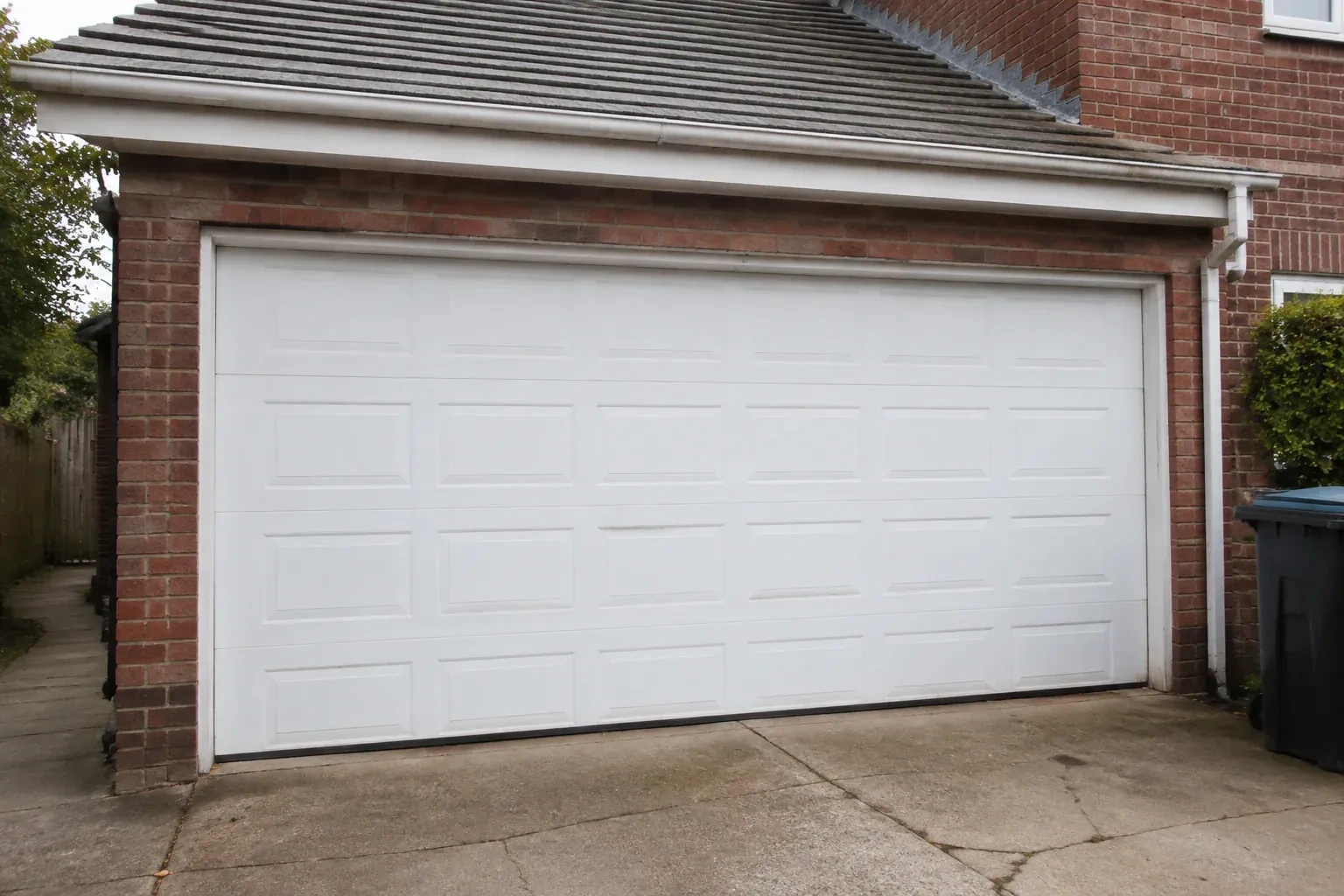
- Insulated Steel Garage Door InstallationThe existing door opens on old tracks that crowd storage near the ceiling.
- Wind-Rated Garage Door ReplacementNew windows would improve the door's appearance, but they also change the section layout and…
- Carriage-House Garage Door InstallationTwo garage openings sit side by side, and small differences in window spacing or decorative…
High-Lift Garage Door Conversion near you
Broken spring, snapped cable, door off the track, opener humming but not lifting, remote lost, seal cracked, panel dented, door too loud for the bedroom above: those are the calls we take from Toronto, and each has its own service page explaining how we handle it.