Repairs · Toronto
Garage Door Bottom Seal Replacement in Toronto
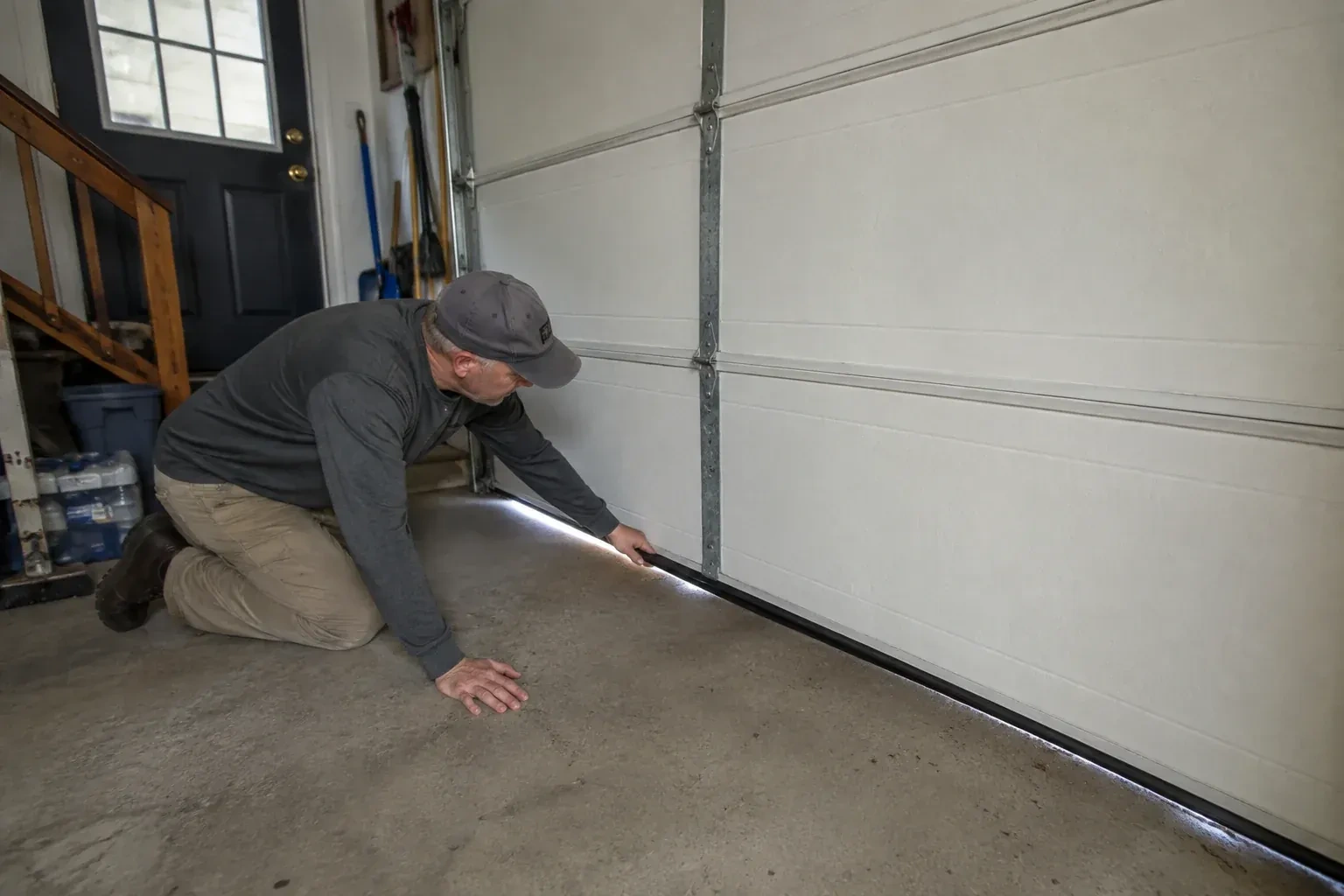
The gap under the door is a finger wide at one end and nothing at the other. The door itself looks straight, but the floor drops away toward the corner where the slab has settled, and drafts pour through the wedge.
Garage Door Bottom Seal Replacement
In plain words
The material matters as much as the shape when the garage sees real winters. Vinyl is the common choice: it resists moisture and sun well but grows stiff in deep cold and stops moulding itself to the concrete. Rubber stays supple at low temperatures and follows an uneven floor, though it can harden after many years of sun. Silicone keeps its flexibility through hot and cold alike and resists cracking, at a higher cost per metre. Choosing the right compound for a door that faces the weather is part of the service, and it is one reason a replacement seal often outlasts the one it replaces.
How the visit goesEvery mild afternoon the snow melts off the car, runs to the door, and by morning the rubber strip along the bottom is frozen to the concrete. Last week the opener lifted the door and left half the seal on the floor.
Toronto
How the visit goes
The floor and the threshold
The concrete under the door is half of the seal. The technician looks at the slope of the driveway toward the opening, the condition of the slab edge where the seal lands, cracks, spalled patches and any step between the slab and the apron. A garage floor that has heaved or settled over the decades is common, and the shape it has taken decides whether a standard seal, a taller bulb profile or a threshold seal glued to the floor gives the most even contact. Where water arrives from outside, the path it takes is noted so the seal and any threshold are placed to meet it.
Wood doors and nail-on strips
A wood garage door usually carries a flat or angled strip of vinyl or rubber nailed directly to the bottom rail rather than a channel seal. The technician removes the old strip and nails, checks the rail for soft spots and cupping, and treats or dries damp wood as needed. The new strip is positioned so its lip angles toward the outside and touches the floor along the full width, then fastened with galvanized nails or screws at close, even spacing so it cannot ripple. On a rail that follows an uneven floor, the strip's flexibility takes up the difference.
What to look for each season
Once a season, close the door, turn off the lights and look along the floor. You are checking for a line of daylight, a corner where the seal hovers, an end that has slipped from its channel, and cracks along the fold of the bulb. Run a hand along the strip for stiff or brittle patches. Then watch the door close under power once and notice how it lands. A change in any of these is worth a call while the fix is a seal or an adjustment rather than a torn strip dragged through a winter. The check takes less time than reading this paragraph.
Garage Door Bottom Seal Replacement
In the van
- Threshold seal and adhesive
- Aluminum bottom seal retainer
- Wire brush and scraper
- T-style bottom seal
- Seal end caps
What affects the quote
Same fees day, night or weekend
1Season and conditions
A seal frozen to the slab, ice at the threshold or working in deep cold adds time for freeing the old strip, clearing the line and keeping the new roll warm enough to feed.
2Floor and threshold shape
A dished, sloped or heaved slab may call for a taller bulb profile or a threshold seal on the floor, each of which is quoted as a separate choice you can accept or leave.
3Access and clearance
Storage, a vehicle that must stay inside, or shelving against the bottom of the door slows the work. A clear metre inside the door makes the visit shorter.
Garage Door Bottom Seal Replacement: questions
Can the seal be replaced in the middle of winter?
Yes, and winter is when most people notice they need one. Vinyl is stiffer in the cold, so the technician keeps the new roll warm until it is fed and takes a little longer working it across the channels. A seal frozen to the floor is freed by hand first. The door is then closed onto the new strip and the opener reset exactly as in summer, and the garage is sealed for the rest of the season.
Does a wood garage door use the same kind of seal?
Usually not. Wood doors most often carry a flat or angled strip of vinyl or rubber nailed directly to the bottom rail, rather than a profile that slides into a retainer. Replacement means removing the old strip and nails, checking the rail for soft or cupped wood, and fastening a new strip so its lip angles outward and meets the floor along the full width. A retainer can be added to a sound rail if you prefer a channel seal.
Is the seal on an insulated steel door different?
Sometimes. Many insulated doors have the seal channel moulded into a plastic cap that wraps the bottom rail, which takes a specific profile rather than a generic one. If that cap is cracked or the channel has opened, a screw-on aluminum retainer can be fitted over the rail so a standard T-style or bulb seal can be used from then on. Identifying the retainer at the first look settles which route applies.
Repair & Maintenance
Garage Door Bottom Seal Replacement near you
Broken spring, snapped cable, door off the track, opener humming but not lifting, remote lost, seal cracked, panel dented, door too loud for the bedroom above: those are the calls we take from Toronto, and each has its own service page explaining how we handle it.