Parkdale Garage Door Services
Issue 2 of 3Garage DoorsToronto, Ontario
Sectional Garage Door Replacement: step by step
An existing opener may remain part of the project when its condition, rail position and compatibility suit the selected door.
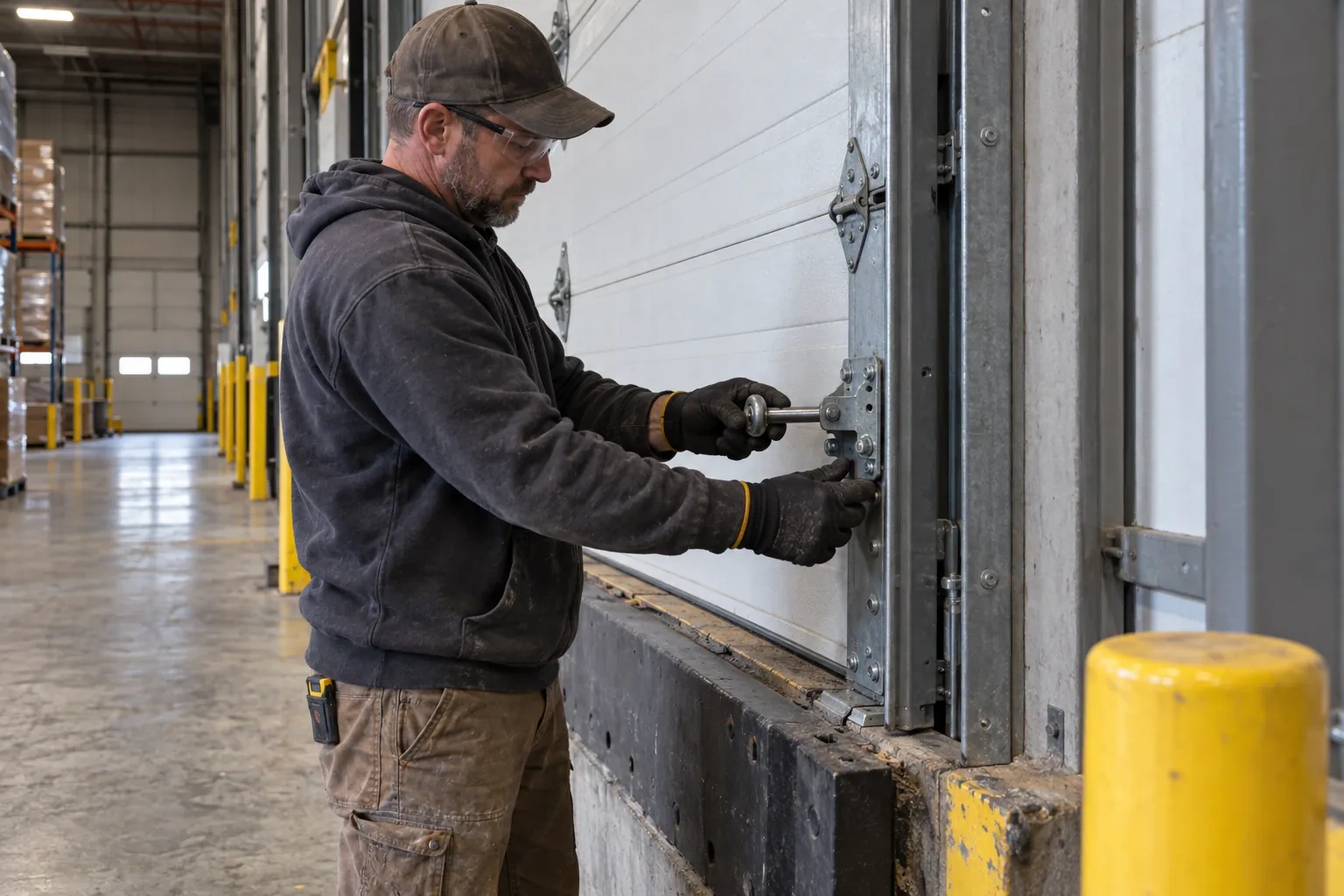
An existing opener may remain part of the project when its condition, rail position and compatibility suit the selected door. Replacement planning records those details, including the attachment point and reinforcement needed on the upper section. After the new door moves freely by hand, the opener is reconnected and its travel limits, force behaviour, photo eyes, reversal response and emergency release are checked. Treating the door and operator as connected but distinct systems helps each one do its intended job.
Choosing section construction
The conversation then turns to how the garage is used. An attached space, a workshop, an unheated storage bay and a frequently opened commercial-style entrance place different value on insulation, interior finish, dent resistance and weight. Section thickness and construction influence the hinges, track and counterbalance specification as well as comfort. The check connects those performance goals to product information, making the choice about the whole door rather than a single insulation figure.
Installing the counterbalance assembly
Lift cables are routed and seated on their drums or pulleys, with bottom fixtures kept under controlled handling. The torsion or extension spring system is mounted using the supplied brackets, shaft supports, containment parts and matched hardware. Trained technicians apply tension in the prescribed sequence, watching cable tracking on both sides. Because the counterbalance is selected for the completed door weight, its setup aims for stable, manageable manual movement throughout the travel range.
Smooth movement by hand
The finished door can be disengaged from the opener and operated from safe gripping points. It should move through the track without harsh catches, cable slack or sections rubbing at the curve. A well-set counterbalance makes that manual travel manageable and helps the door remain controlled at test positions. The handover includes a demonstration of this movement and the release mechanism, giving the owner a useful reference for recognizing a meaningful change in balance later.